



Spelling out the species
One vital aspect of packaging is to label it so that it provides accurate information about the product inside.
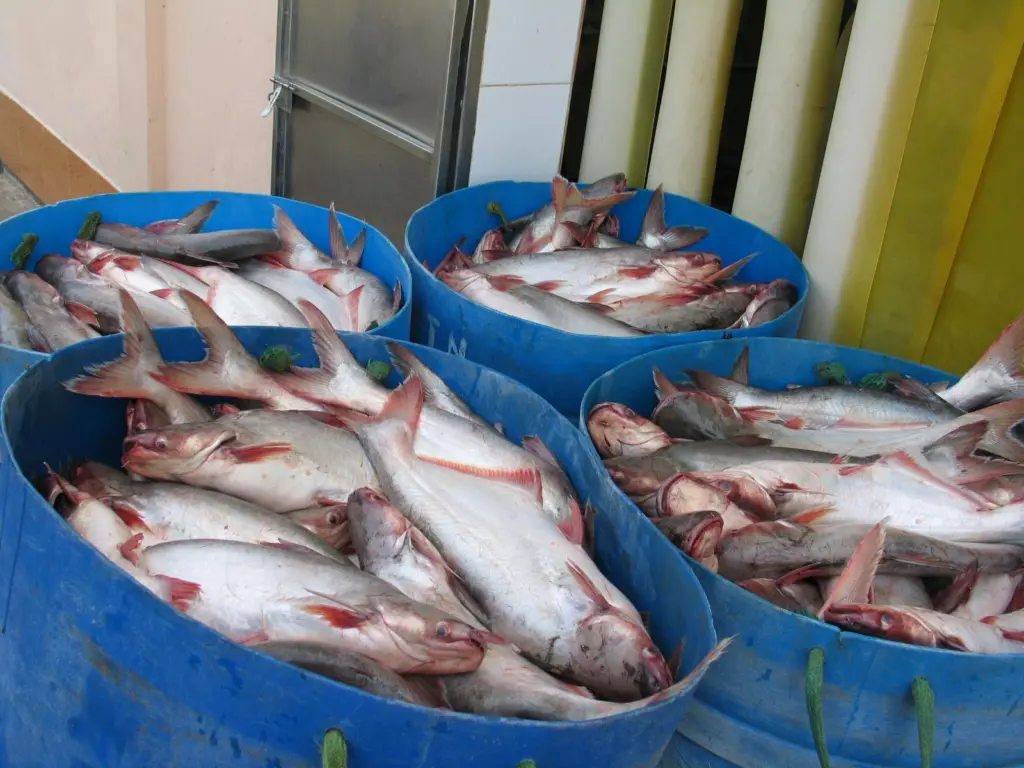
Mislabelling, whether intentional or accidental, costs the seafood industry “hundreds of millions of dollars” in the USA alone, according to the National Fisheries Institute.
One of the commonest forms of inaccurate labelling is to try and pass off a substitute for the species of fish or shellfish that is actually named on the pack. And the further along the chain to the consumer the product goes, the more chance there is that the switch will go undetected.
The obvious reason for doing this, of course, is for financial gain. Fish species can vary enormously in price so there is always the temptation to label a product incorrectly and trust that the recipient won’t notice that he or she is not getting what was ordered.
Whereas a skinless fillet of one whitefish species may look very much like another, it is still remarkable how people dealing with fish cannot recognise individual species even when whole. Richard Benyon, the UK’s fisheries minister, noticeably failed to name several well-known species correctly at Billingsgate Market during one of Hugh Fearnley-Whittingstall’s ‘Fish Fight’ programmes last year.
However, it is one thing for a politician to be embarrassed on television, but quite another for a buyer to be cheated into paying for a particular product that is actually something else.
The Boston Globe newspaper carried out an extensive investigation into fish labelling towards the end of last year. It collected samples from 134 restaurants, grocery stores and supermarkets in and around Boston, and hired a laboratory in Canada to conduct DNA tests. Analyses showed that 87 out of the 183 samples – 48% – had been incorrectly labelled.
In some cases this was due to lack of knowledge of the species in question, but in others it was deliberate fraud. And in some instances this fraud would not just have cheated the consumer, but could have harmed his or her health. Escolar (Lepidocybium flavobrunneum), which was often substituted for albacore, or ‘white tuna’, can cause gastrointestinal problems.
The newspaper said that substitution could take place anywhere along the route to the consumer’s plate, and blamed fishermen, importers, wholesalers, restaurants and stores alike for the malpractice. It also pointed out that since most fish sold in the USA is now imported rather than caught locally, there was much more scope for species substitution to take place.
It also blamed the government agency responsible for food inspection, the US Food & Drug Administration (FDA), for not making seafood labelling a priority saying it examines only about 2% of imported seafood annually and then its main inspection programme, not surprisingly, focuses on food safety not on potential economic fraud.
There are other cases of mislabelling, of course, such as putting the wrong weight on the pack, and all told it costs consumers and the industry not just a vast amount of money, but also in consumers it causes a lack of trust. And that is something the industry can ill afford when it is facing increasing competition from other protein foods such as chicken.
Related Articles
 PROCESSING & REFRIGERATION
 SEAFOOD
 SEAFOOD