

Samherji invests in charr capacity
Three new bore holes are being drilled at Samherji’s land-based fish farming site at Grindavík in southern Iceland. This is to ensure water economy following last years expansion and to prepare for the next phase of expansion as significant investment is put into increasing the farm’s capacity.
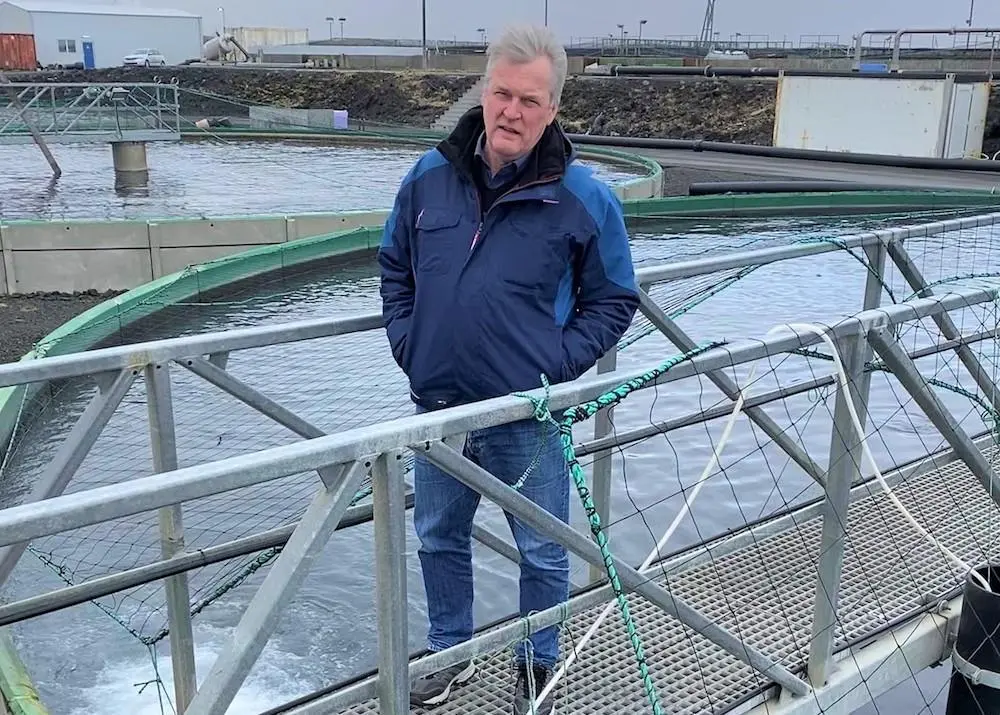
The site at Staður near Grindavík operates both a nursery and an on-growing facilities for Arctic charr.
After hatching, alevins are transferred from the hatchery at Núpar to the nurseries at the Grindavík site. The fish are reared at the nurseries for 10-12 months or until they reach a weight of 100 grammes. Then they are moved from the nurseries to on-growing sites where the charr are kept under optimal conditions in tanks with high-quality brackish water.
When harvesting, fish are pumped from the tanks and transported live to the company’s processing plant in Sandgerði for slaughter and processing.
The drilling of the new bore holes has been successful despite the need for new procedures due to the current pandemic. Construction is well underway and activation of new wells is expected by the end of June.
“This will significantly increase the capacity of the farm. We are pumping massive amounts of water. When construction is complete, the station will be able to pump two and a half cubic metres of seawater per second,” says Hjalti Bogason, director of Samherji Fishfarming’s operations in the Southern Peninsula Region.
The site in Grindavík was recently granted an expansion of its operating license to 3000 tonnes and Samherji Fishfarming also has a license for 1600 tonnes at Vatnsleysa.
According to Hjalti Bogason, fish farming in the Southern Peninsula Region will be able to produce almost 4000 tonnes of Arctic charr when this part of the project is completed.
Samherji Fishfarming is currently the world’s leading producer of Arctic charr, with about 3800 tonnes per year, which is almost half of all farmed Arctic charr produced worldwide.
Related Articles
 AQUACULTURE
 AQUACULTURE
 AQUACULTURE