


Rescue and survival
Menakhem Ben-Yami writes on two stories of rescue and survival
During my years of active fishing and sailing in two seas, two oceans, some large African lakes, and on the channels and branches of the Niger Delta, I found myself at times in such dangerous situations that I was happy to stay alive and, mostly, even unhurt. But that’s nothing compared with the story told to me by an old friend, Captain Harry Burgess.
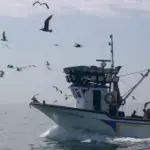
Last October, after some 25 years on various assignments in American Samoa, Harry Burgess, an experienced fisherman and mariner, decided to go to Hawaii and longline there for sushi-grade tuna. So, he flew to Alabama to pick up a boat named Hawaii Five 1. There he hired another crew member. All the two had to do was to take the boat on a quick eight day trip to the Panama Canal, and to pick up the crew waiting for them there. The couple, both experienced grandfathers in their fifties, had set out for the trip.
Three days out, in the middle of the Yucatan Channel, a series of freaky swell rocked the boat. Harry had just time to call the Coast Guard on the satellite-phone and give them their position when, following even bigger set of swell, their boat capsized.
From here, I will let Harry tell the rest of the story in his own words…
“We found ourselves upside down. It all happened in about 10 seconds. I made the distress, Mayday call, right there into the phone, then everything went dark. All I remember is feeling a dry area above my head. I stuck my head up, took in two gulps of air, and saw a greenish light. I swam toward the light, it got brighter…it was an open ports idea wheelhouse door and I swam down and through it. Then up to the surface…the water was warm…diesel fuel all over the water…I saw the other man, with a life ring.
“I swam over to him…the boat was floating upside down…fuel pouring out of the breather spouts on each tank. We waited for it to sink, so the two 10-men life rafts would inflate. The boat went down after about 25 minutes…the life rafts popped up, inflated as they were supposed to do and we started swimming towards them. They deploy a small nylon sea anchor when they inflate, so they wouldn’t drift away that fast. As we got within 70 yards of the first raft, the upside down stern of the vessel popped up, and entangled the raft in the propeller and rudder area…the engine had long since died, but the propeller and rudder shredded the first raft so we started swimming as hard as we could to the second raft.”
Rescue
“It took us 4.5 hours (!) to get to the raft…treading water sharing a single life ring. I’ve never been so exhausted in my life…two 53 year old granddads…we caught up to the raft right at sundown. A ship saw us, I fired a flare – there were three of them in the raft. For some reason the ship remained on station until the coast guard plane arrived two hours later…we were about 251 miles WSW of Key West, Florida.
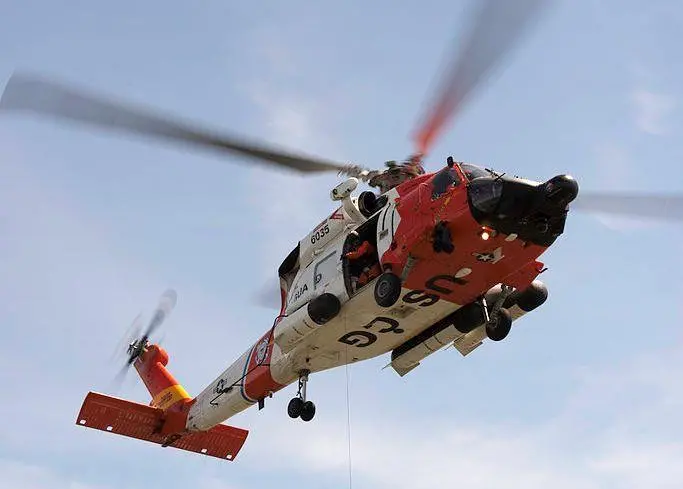
“A copter arrived, pulled us both to safety, then to Key West…no major injuries…I had two lacerated fingers – all good now. My friend Raymond flew down, put us in a nice hotel for a week to recover, then back here. I lost all my identification, personal effects, clothes, etc… I’m all good now with everything except my passport. You have to have ID to get ID and I lost it all. We were very, very lucky, and I’m glad to just be alive. There will be an insurance settlement – I have a good lawyer, and so far, he’s doing great job.”
So far, Harry’s most remarkable account of survival and rescue.
Still, it reminded me an experience of a rescue that happened in our waters. Back in the 1960s our government on a fishery development spell, (in those times, governments did such things), acquired some wooden hulls of 18m Scottish MFVs. One such empty hull was towed at about 4 knots by a small harbour-tug from Haifa to Yaffo, where it was supposed to be properly completed, outfitted, and made into a fishing boat by our artisanal yards.
Unfortunately, early on the 70 mile trip, a southwesterly gale had blown up a storm, with a low pressure fast developing between Cyprus and Israel. The swell turned into nasty breakers and the sea became stormy.
On the hull was one man, incidentally a brother-in-law of mine, named Sali. He had no communication means (no iPhones those times). When the sea rose, water started spilling into the hull, which became increasingly harder to tow. Eventually the towline broke, the small tug lost the sight of the hull in the hell and high water and went away to save itself.
We had a short-wave wireless network and soon the word spread that the hull with Sali on board had got lost. I happened to be at sea with my boat, another Scottish MFV, and went to the approximate position of the hull. Luckily, I found it within a couple of hours floating full with water and only a bit of the gunwale and the front of the bow could be seen on the surface. Sali sat on a small deck section, partly submerged, holding to a cleat. Without a proper towline I used a very long rope, slipped an anchor to its mid for springiness, Sali tied the rope through the chain-locker holes and came over to us, all wet and totally exhausted.
It was a long towing trip; we could move at best at two knots in that ugly weather. But eventually we got the hull and ourselves safely to Jaffa.
Related Articles
 FISHERIES
 FISHERIES
 WORLD FISHING EVENTS