


Once again the oil flows free
Menakhem Ben-Yami looks at the highly topical issue of ocean oil spills and their hugely damaging effects on the fishing industry.
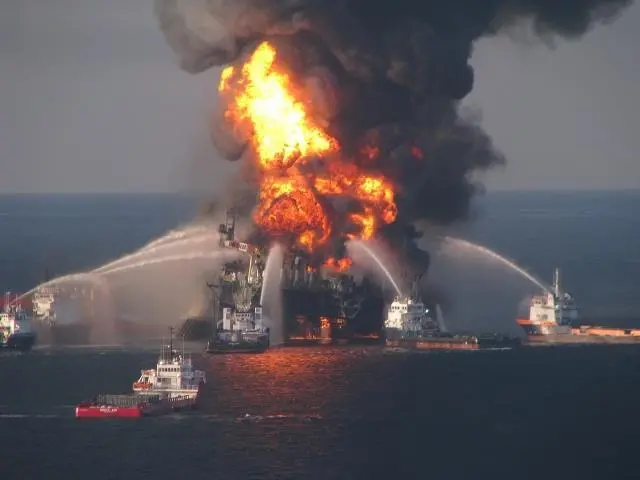
The disastrous Gulf of Mexico oil spill caused me to reread a little book, published a quarter century ago by the Memorial University of Newfoundland, entitled ‘Fish versus Oil’.
Of the 13 authors of the book’s chapters, eight mentioned and warned of the probability of oil spills and their effect on fisheries. “…it is a question of when and where it will occur rather than if it will happen” – wrote John H Goodland of the Shetlands. SG Canning, a Newfoundlander wrote: “… it is difficult to overestimate the highly negative environmental or economic consequences of an oil spill; predicting the exact nature, extent and significance of an oil spill on any fishery is recognised as a complicated issue”. How right they were.
What has been going in the Gulf of Mexico is one of the greatest oil spills in history. And who remembers the worst of them all, the 1910-11 Lakeview Gusher spill, which during 18 months discharged into the Kern County, California, over 9 million barrels of crude? At the moment of writing these words the Deepwater Horizon spill with at least 5 million barrels out and still going strong, is doing its best to reach the top of the list.
As in the case of other spills, one of its main victims is the fishing industry, in general, and fishing people, in particular.
Long recoveries
The headlines an oil spill gets depends on how close it is to the beaches of a “western” country, which is why the Deepwater Horizon, the 1978 Amoco Cadiz, which polluted French coasts and caused, among other problems, a collapse of shellfish prices for a long period, and the 1989 Exxon Valdez spills got more sustained publicity than the 1991 Gulf War spill and the 2009 Montara oil spill in the Australian sector of the Timor Sea.
But, the latter spill, though much weaker and in much shallower water, took 73 days to kill, and caused thousands of fishing people to migrate to Sumatra to find a new livelihood, because their catches had declined drastically. According to spill observing scientists it will take many years for the area’s ecology to return to normal.
“If Barack Obama demanded $20 billion (€15.6 billion) in damages from BP, the operator of the Monatara oil field should pay about $15 billion (€11.7 billion) to compensate the losses of fishermen in the western part of East Nusatenggara and the islands of Rote, Sabu and Sumba,” said Ferdi Tanoni a local observer. “The oil spill had caused a humanitarian tragedy of huge proportions,” Tanoni said, urging the Australian government, 11 months after the blowout, to disclose the results of its investigation into the Montara disaster as soon as possible.
American red tape
Mexican Gulf fishermen should look with a wary eye on the social and ecological consequences of the spill in the Timor Sea, and of the other huge spills and be prepared for the worst. “A full understanding and the full impact (of the spill) to the Gulf’s fishery may be years away,” said Prof Samantha Joye, a marine expert specializing on the Gulf of Mexico.
Although the 1991 Gulf War spill in the Persian Gulf had a relatively moderate effect on the Persian Gulf’s ecosystem, explained by the fast bio-decomposition of the oil owing to the high water temperature, nobody can be sure that the same would happen in the Gulf of Mexico.
The consequence of the bureaucratic-legalistic muddle is the unconceivable delay of the implementation of up-to date technology, which reportedly, could separate oil from water pretty much just as fast as the oil was gushing out of the well. The obstruction is due to a US regulation, prohibiting discharge to the sea water containing more than 15 ppm of oil. Thus, emergency management of this disaster in the Gulf of Mexico has been considered illegal and delayed for months.
Oil companies while going further offshore and to deeper waters have been spending tens of millions of dollars on marine oil explorations and drilling. Only a miserable fraction of this sum has been spent on research into new and more efficient ways to deal with oil spills. Thus, the same means and technology that were applied over 20 years ago to the Exxon Valdez spill have been now applied in the Gulf of Mexico.
Small compensation
Reading the headlines and dealing with those huge spills should not make us forget the numerous smaller spills that occur continually in those countries where the oil companies are given plenty of slack, where it comes to environmental and humanitarian caution.
According to an Amnesty International report of June 2009: “In the Niger Delta, hundreds of oil spills occur every year, and some 2,000 sites have been registered as contaminated by the National Oil Spill Detection and Response Agency. The true figure may be much higher. People living in the Niger Delta have to drink, cook with and wash in polluted water; they eat fish contaminated with oil and other toxins – if they’re lucky enough to still be able to find fish; the land they use for farming is being destroyed; after oil spills the air they breathe reeks of oil, gas and other pollutants; they complain of breathing problems, skin lesions and other health problems.”
As long as drilling for oil is inevitable, a lesson to be drawn from all those spills is that without strict state control over the drilling and extracting operations, and adequate financing of the related research and technology development, one day a future spill will cause such damage that all the assets of the oil companies won’t be enough to compensate both those who were directly hurt and humanity at large.