


Marport appoints chief sonar scientist
Marport Deep Sea Technologies Inc, a leading developer of software defined sonar technology, has appointed Dr Marc Pinto as its chief sonar scientist.
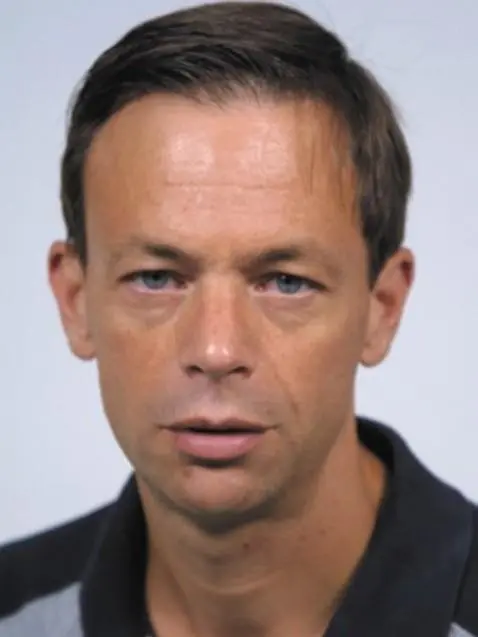
Pinto will be employed full-time with Marport’s French subsidiary located in Lorient, France.
According to Canadian-headquartered Marport, Pinto is recognised worldwide as a preeminent thought leader and expert in synthetic aperture sonar (SAS) – a type of sonar in which sophisticated signal processing of successive acoustic pings is used to form an image with much higher resolution than conventional sonars.
The image formation can require aligning the echoes to less than 0.1mm. This is made possible through recent advances in broadband sonar technology combined with adaptive focusing techniques similar to those used in optics, but performed in software rather than in hardware.
The practical realisation of SAS, on surface ships and underwater vehicles, is one of the most significant advances in ocean systems engineering in recent times. Modern broadband SAS systems provide an area coverage rate of several square kilometres per hour with centimetric resolution which enables an optical like image quality, greatly facilitating the recognition of mine-like objects.
SAS has the potential for providing image quality that is unmatched by current sonars and is a key technology whenever high resolution is required. The technology can contribute towards the reduction of several capability shortfalls identified by NATO navies, such as difficulties in detecting and classifying maritime mines for reasons of size, shape, material or location.
Furthermore, a by-product of SAS is a highly accurate ground velocity estimate which should be of great interest for autonomous underwater vehicle navigation applications, to further limit the drift of aided inertial navigation systems.
In addition, when combined with depth estimation techniques, SAS can deliver high quality 3D images of the seabed which are sufficient to meet or exceed even the most demanding standards for hydrographic surveys today.
In his new role, Pinto will work with Marport’s product teams to influence product strategy and direction. His initial focus will be on developing high resolution imaging sonars that leverage the company’s software defined sonar platform.
He will expand on the company’s vision to develop a new series of high resolution sonar solutions for underwater defence, offshore energy, ocean science and commercial fisheries.
“The appointment of Dr Pinto demonstrates the importance that Marport gives to innovation in all aspects of our operations, and is a further step in developing advanced sonar products,” said Karl Kenny, Marport’s president and CEO.
“As our business grows, we need seasoned personnel who can deliver on the next stage of our technology and product vision. With his technical acumen, his track record for leading world-class technology organisations and his significant sonar experience, Marc has what it takes to help bring our next generation, high resolution imaging sonars to market.”
Pinto said: “I am very impressed with the quality and breadth of Marport’s software defined sonar technology and expertise, as well as with the potential competitive advantages that this technology can provide. I look forward to leveraging this technology platform and helping to define the product strategies that will drive Marport to an industry-leading position in the underwater acoustics industry.”
He graduated from the Ecole Nationale des Ponts et Chaussees, Paris in 1983. He received his PhD in Solid State Physics from the University of Paris in 1991. From 1985 to 1993 he worked as a research engineer for Thomson-CSF, specialising in the application of numerical techniques to magnetic recording.
In 1993, he joined Thomson-Sintra (now Thales Underwater Systems) as head of the Signal Processing Group, specialising in research of sonars for maritime mine countermeasures and airborne anti-submarine warfare.
Then in 1997 he joined the NATO Undersea Research Center, La Spezia, Italy, where he served as head of the Mine Countermeasures Group and conducted research into synthetic aperture sonar systems for hunting maritime mines.
In 2004, he was appointed head of the Expeditionary Mine Countermeasures and Port Protection Department where he oversaw research for AUV-based mine-hunting, maritime mine countermeasures and harbour defence.
Related Articles
 FISHERIES
 FISHERIES
 WORLD FISHING EVENTS