




Margate lifeboat assists Belgian trawler
The crew of the Margate RNLI lifeboat have provided assistance to a Belgian trawler that ran aground on a sandbank off the north Kent coast with fears at one stage that its crew would have to be taken off.
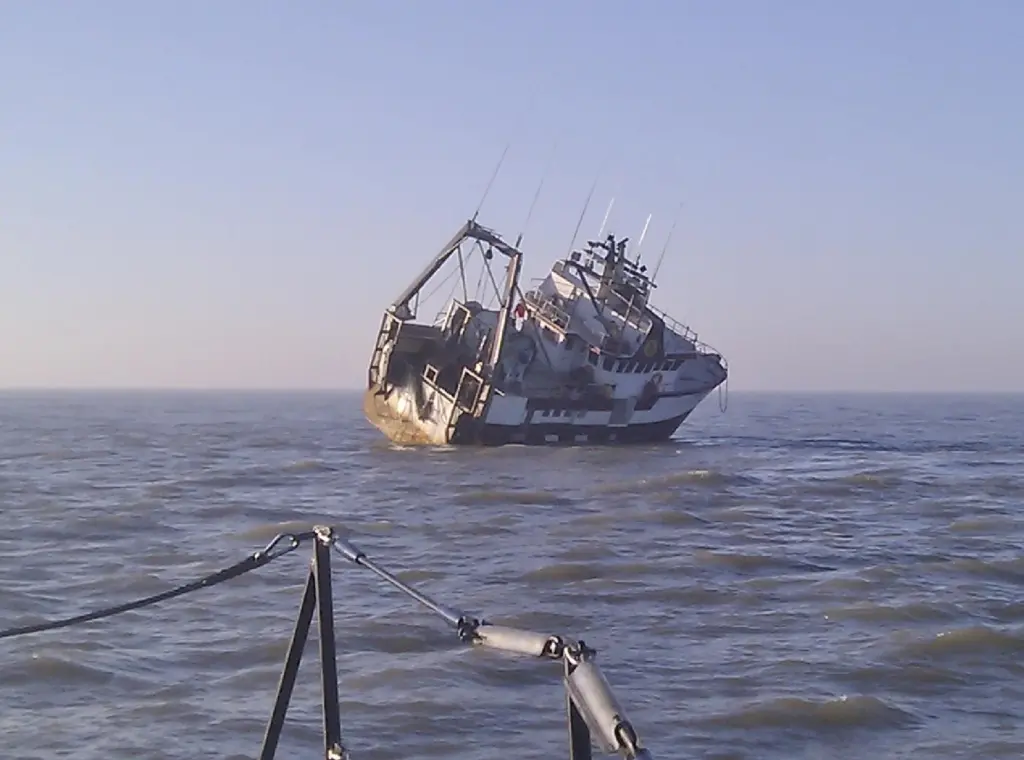
The 20m long, 190 tonne Belgian trawler Marreje Aaltje contacted coastguards at Dover on 23 March reporting it had run aground while fishing on the South Knock, part of the Kentish Knock sandbank around 14 miles north east of Margate. The skipper of the vessel, which had four crewmembers onboard asked for assistance in refloating.
The Margate all-weather lifeboat was launched, and once on scene assessed the situation. The trawler had grounded at high water, meaning it would have to wait around 12 hours before it had the opportunity to refloat. As the trawler settled on the falling tide there was concern that it would heel over excessively on the steeply shelving bank, endangering the crew when the tide came in. Consideration was given therefore to taking the crew off as a precaution. Meanwhile the trawler’s skipper made arrangements for another Belgian trawler to come and assist it to refloat again.
The trawler eventually settled at an angle of 45’ and the lifeboat took soundings around the area and advised the skipper on the best route to take to get clear of the sandbank at the next high tide. Once the situation had stabilised and it was confirmed that the assisting vessel would arrive before the expected time of refloating the lifeboat was released and returned to station.
The vessel was later towed clear by the other trawler and after establishing that no damage had been suffered it continued fishing.
Peter Barker, deputy launching authority said: “Vessels running aground are not unusual but there were two areas of concern with this particular incident. The sandbanks in the area include some with very steep sides with the danger of the vessel failing to settle safely. Also, as it grounded close to high tide and the next high water was predicted to be lower than the previous one there was the potential that there would be insufficient water for it to float clear. Fortunately all ended well on this occasion with the lifeboat crew able to provide advice and provide the coastguard with an accurate assessment of the situation.”
Related Articles
 FISHERIES
 FISHERIES
 WORLD FISHING EVENTS