

Leviathan: Death and survival
Menakhem Ben-Yami reviews a new book on the history of whaling.
The book ‘A Savage History: Whaling in the Pacific and Southern Oceans’, written by John Newton, published in 2013 by the University of New South Wales Press Ltd. has taken me back to the movies ‘Sea-Wolf’ with Edward G. Robinson and ‘Moby Dick’ with Gregory Peck – both actors playing the tough, obsessive characters of captains hunting seals and whales, based on the classics written, respectively, by Jack London and Herman Melville. I saw them both, about 60-65 years ago.
John Newton, an Australian journalist and proficient writer, has produced an amazing book on the history and substance of the world’s whaling industry in the Southern oceans. As its name indicates, the history of whaling was cruel to both the whales and their hunters. Some species of whale were hunted down close to extinction, and only then, thanks to NGOs (non-governmental organisations) such as Sea Shepherdand Greenpeace, along with gradually intensifying international legal efforts, the carnage was restrained and whale populations recovered.
Whaling has been practiced from times immemorial, starting with whales and dolphins beaching on their own, or for whatever reason, crowding in shallow sea inlets and bays. The exploitation of cetaceans was essential for the survival of the natives of the lands and islands of the Northern parts of Pacific and Atlantic Oceans. People such as the Eskimo, Faroese, the early inhabitants of Newfoundland and Labrador, and the Inuit in the Far North and the Nootka of Pacific North East, killed whales for subsistence, as did some coastal people in the Far East, wherever smaller whales and dolphins approached their shores. But, these were marine fishermen who, in the Middle Ages, had already encountered and killed whales far offshore.
The great oceanic whaling industry was started by Basque ocean-going fishermen, who in the 16th century discovered summer concentration of whales initially in the Gulf of St. Lawrence, between Newfoundland and Nova Scotia. Spanish and French fishermen-turned-whalers expanded their hunting grounds along New England and up to Greenland. The oceanic whaling, sealing and fishing industries used manpower from coastal communities, coaxing sea-going men with the promise of making good money, good food and plenty of booze onboard, and, in the Pacific Polynesia and Melanesia, aborigine women liberal about sex. Where there were not enough volunteers to sign on for often four years of sailing, men in portside pubs were offered free booze, and once drunk, were shanghaied only to be woken up to work when the ship was already well out to sea. Before the introduction of modern technology, such as steam power and harpoon guns in the whaling fleet, when specialisation became the order of the day, those three industries had employed more or less the same sort of people.
Poor conditions
Life onboard whaling ships was crowded and smelly, while the work was hard and often for many hours and sleepless nights. Although after the introduction of motorisation the living and working conditions generally improved, they were still much inferior to today’s, even on the smaller fishing vessels.
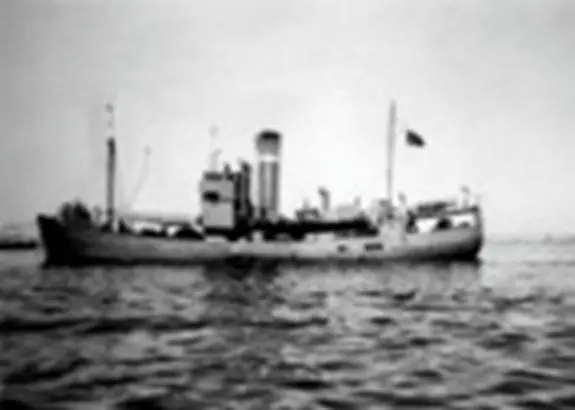
In 1948, I spent many months onboard Drom Africa (South Africa), one of the first two or three vessels of the fledgling Israeli Navy. A gift from South African sympathisers, in her youth in the early 20th century she used to be a steam-powered whale-chaser. Before WW2 she was converted to trawling, only to serve as a minesweeper during the war. The conversion and some modernising improvements notwithstanding, I could perceive the rough-tough living and working conditions that the whalers had to endure. And, still, in spite of the small size of this constantly rocking and rolling boat, and the constantly wet low-freeboard deck, I’d prefer to serve on such a chaser than onboard a smelly whale-factory ship.
The crew’s accommodations were in the crowded focs’l, where two-level berths filled a scanty space. It was separated from aft compartments by the engine room with the adjacent, heat radiating boiler compartment. Further aft were two small cabins – one for two engineers, the other for the quartermaster and the “donkeyman”. The ship’s stores were located further aft. The superstructure was amidships and contained a small mess-room and the ship’s galley, at the deck level, and above – two cabins, one for the mate and the other for the wireless operator with all the ship’s radio equipment. The captain’s cabin was on the top level, behind the wheelhouse.
In his final chapter, entitled Whaleography, John Newton gives a short account of the marine mammals that fall under the scientific name of Cetacea. It is composed of toothed whales (e.g. sperm-whales, killer whales, dolphins and porpoises) and baleen whales (e.g. blue whales – with an average weight of some 110mt and reaching over 30m in length, the largest of all living, and perhaps also extinct animals – right whales, fin whales, minke, and humpback whales). The toothed whales prey on all sorts of marine animals, starting with other whales and seals, giant squids, penguins, and ending with all sorts of fish. The baleen whales are filter-feeding, skimming the water for krill and other small creatures, while some, like the fin whales and humpbacks, feed also on small schooling fish.
A Savage History reflects seamen ambition and endurance in their quest and conquest of valuable marine resources – whales in this case – that for at least two centuries had bravely served the world’s population with oil for their lamps and meat for food. But, on the other hand, it also describes man’s cruelty and the wanton profit-driven industry that led to the quasi collapse of many whale species during the 19th and 20th centuries. Apart from being a most-interesting read, it may also serve as both a beautifully illustrated coffee-table book and a reference book for all students of this and associated subjects.