



An increase in bacteria as a result of climate change is reducing the number of fish, according to environmental experts.
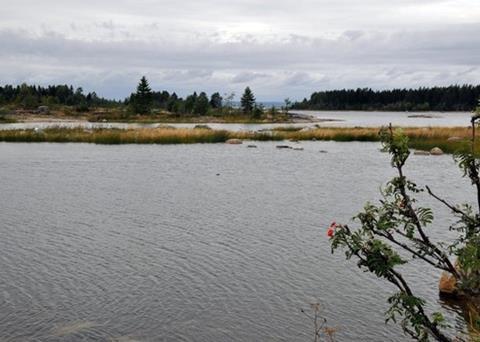
In the northern parts of the Baltic Sea both precipitation and river discharge are expected to increase as more carbon is dissolved in sea water. The increased river discharge will lead to a higher inflow of river-borne dissolved organic matter to the coastal zone, which in turn will promote bacterial production.
Simultaneously, the phytoplankton production will decrease as a result of both competition with bacteria for nutrients and the deteriorating light conditions.
To study the aspects of food web efficiency and climate change, a series of measurements were performed in the northernmost part of the Gulf of Bothnia by a group of researchers working for EcoChange, part of the Swedish government’s programme of marine environmental research.
The scientists found that the large majority of the dissolved carbon in the sea water is of terrestrial origin, and the bacterial production is threefold higher than the phytoplankton production. Consequently, the food web in the studied area is heavily reliant on bacterial production.
The efficiency of a food web indicates how much energy is required for the carbon to transfer from the lowest trophic levels to higher levels in the food web, such as fish. A food web based on bacteria will contain additional steps compared to a phytoplankton based food web as these tiny microbes are only edible for smaller members of the food web.
Since energy is lost at each step the bacterial-based food web will therefore be less efficient. The relationship between bacterial production and phytoplankton production will have a great impact on the food web efficiency.
If the proportions change, so that the bacteria production increases in importance, the productivity at higher trophic levels is expected to decrease, as well as the total productivity of the coastal ecosystem. In simple terms according to the researchers: more bacteria - less fish.