


British Columbia''s Cohen Commission has sparked controversy as it tries to determine if aquaculture may have had a hand in the depletion of Fraser River sockeye salmon.
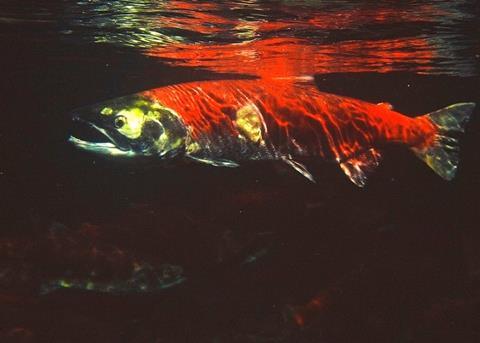
The inquiry was called after millions of sockeye salmon failed to return to the Fraser River in 2009.
Canada’s Fisheries and Oceans scientist Kristi Miller testified at the inquiry. Her stand was watched with interest, especially since the government banned her from talking to the media for several months. This followed the appearance of an article in the journal Science, in which she suggested that the disappearance may have a viral link.
In Kristi Miller’s first opportunity to speak publicly since the ban she explained there appeared to be a new virus, discovered in late February, that “could be the smoking gun” the inquiry has been looking for.
Ms Miller said the new virus has potentially been matched to a genetic signature linked to increased die-off of sockeye salmon, reported the Vancouver Sun, although a fellow Department of Fisheries and Oceans scientist, Kyle Garver said that without more research, it was purely speculative to say the virus was a significant factor in the 2009 collapse.
However Ms Miller went on to say, "If we demonstrate that when fish are entering the ocean ... they become stressed ... and they carry a high load of this virus, and ... we see significantly enhanced mortality, there certainly is the potential that this virus could have a major impact on salmon declines."
Oregon State University professor Michael Kent had told the inquiry on Monday that there seemed to be no "smoking gun", that is, signs of a particular disease causing the dramatic drop. He was accused by a lawyer for a coalition of activists of deliberately avoiding research into the impact of fish farms, but Mr Kent said he didn't find much evidence of diseases being transferred to wild sockeye salmon from aquaculture.
However, Mr Kent did admit that a very large number of salmon could die with the presentation of a new viral disease: it may not be detected because of a lack of baseline data and the carcasses would disappear in the ocean, said Mr Kent, who had worked for Canada's Department of Fisheries and Oceans for more than a decade.
The hearing will also be presented with a testimony from fish farm opponent Alexandra Morton of the Raincoast Research Society.
"As these hearings proceed it will be a detective effort. The best fit answer is going to have to explain an 18-year decline of only the sockeye that migrate along eastern Vancouver Island, while other neighbouring runs were unaffected, even increasing," said Ms Morton in a statement issued last week.
However, the local aquaculture farmers association rebuts the accusations. "We have been actively participating in the Cohen Commission process since it started nearly two years ago and we are ready to help correct the misconceptions and misinformation regarding our BC salmon farms," said Mary Ellen Walling, executive director of British Columbia's Salmon Farmers Association.