




Stakes high for Alaska communities as ‘A’ season for wild pollock opens
The ‘A’ season for wild Alaska pollock officially opened on 20 January 2025, with the industry stating that the stakes couldn’t be higher for thousands of Alaskans as the fishery, one of the largest in the world, serves as a lifeline for coastal communities and is a key driver of the state’s economy.
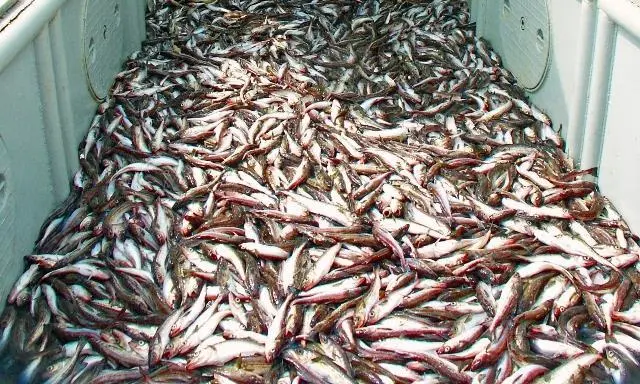
According to the Alaska Pollock Fishery Alliance, which represents a range of stakeholders including fishery processors, fishing vessel operators and customers, as well as Alaska community and economic development organisations, the ‘A’ season is a make-or-break time for Unalaska, Kodiak and other fishing communities and will determine whether they thrive or stare down an uncertain future.
The alliance highlights that the industry has experienced significant challenges in recent years. In December, pollock fishermen faced proposed trawling bans in Prince William Sound. The Alaska Board of Fisheries ultimately rejected the proposals – a decision the board reached after careful examination of data and solid arguments challenging the merits of the proposals. The decision came just weeks after a regulatory closure of the Central Regulatory Area of the Gulf of Alaska pollock fishery, a closure that left many Kodiak fishing and processing families reeling.
“The Central Gulf of Alaska pollock fishery was cut short last fall which had a significant economic impact on Kodiak. Processors, vessels, and support businesses are counting on a successful ‘A’ season pollock fishery to survive,” said Julie Bonney, Executive Director of the Kodiak-based Alaska Groundfish Data Bank.
Despite several challenging years for Alaska’s fisheries, the Alaska pollock fishery remains a notable bright spot. The total allowable catch (TAC) for 2025 has been set at 1.375 million tonnes in the Bering Sea and 171,000 tonnes in the Gulf of Alaska.
A successful 2025 fishery will send ripples across dozens of communities, driving millions of dollars in economic activity and ensuring stability in regions where opportunities can be few and far between.
The Community Development Quota (CDQ) programme, which allocates a portion of the annual Bering Sea pollock harvest to 65 Western Alaska communities, is an example of the far-reaching impact of this important resource. The CDQ supports local jobs, funds critical infrastructure, and generates revenue that sustains fishing villages. With more than 30% of the Bering Sea pollock industry owned by CDQ groups, the economic health of these coastal communities is tied directly to the 2025 season’s outcome.
“The industry has faced considerable setbacks in recent years,” Aleutian Pribilof Island Community Development Association CEO Luke Fanning said. “The success of the pollock fishery is not only critically important for the jobs it creates, the families it supports, and the communities it sustains, but also for the infrastructure and markets it provides for other fisheries like crab, pacific cod and sablefish.”
The Alaska Pollock Fishery Alliance also highlights that international competition from Russia’s heavily subsidised pollock industry has driven down fish prices, while domestic policy debates threaten to disrupt fisheries operations.
“We are headed into this 2025 ‘A’ season with three objectives: safety, salmon avoidance and efficiency on the grounds. We have the tools and knowledge to assure all three. A lot is riding on those priorities, and we will succeed as we have in the past,” said Captain Dan Carney, who operators a pollock trawl vessel. “For most of us, this is not just a job but a way of life, and we will continue to do all we can to sustain that – not only for the pollock fishery but for all Alaska fisheries. We are always fishermen first.”
“The Kodiak fleet is focused on minimising Chinook salmon by-catch to prevent a future fishery shutdown and has voluntarily agreed to delay the CGOA pollock fishery for three weeks,” said Captain Chan Johnson, operator of FV Walter N, which fishes in the Bering Sea and Central Gulf of Alaska. “The entire community depends on a successful pollock fishery. We take our responsibility very seriously.”
A successful pollock season fuels Alaska’s economy and supports the nation’s seafood industry. Pollock alone contributes nearly $1.5 billion annually in wholesale value, providing products that feed millions worldwide. The fishery also underpins the broader seafood supply chain, sustaining businesses like processing plants, container shipping operations and port services.
“This fishery is and economic engine for the CDQ programme,” Fanning said. “Without it, the level of resources going into Western Alaska would be greatly reduced, with no clear replacement.”
On the pollock fishery’s role as an economic and cultural cornerstone, Bonney added: “It is not just about catching fish – it’s about sustaining a way of life for thousands of Alaskans and ensuring the survival of communities that depend on the sea.”
The Alaska Pollock Fishery Alliance’s work is guided by a committee of pollock trade associations, harvester companies, customers, CDQ programme representatives and scientific and policy experts overseen by the Association of Genuine Alaska Pollock Producers’ (GAPP) board of directors.
Related Articles
 PROCESSING & REFRIGERATION
 FISHERIES
 FISHERIES