






2024 fishing quotas approved for EU, non-EU waters
Following three days of negotiations in Brussels, European fisheries ministers have agreed on fishing opportunities in the Atlantic, the North Sea, and in the Mediterranean and the Black Seas for 2024.
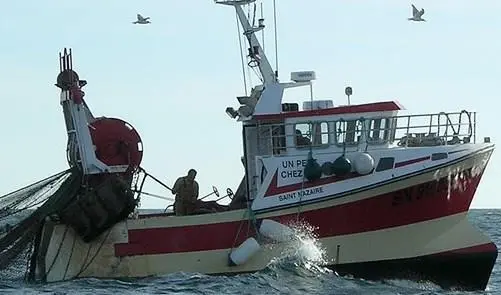
The European Council said the political agreement that’s been reached is “in line with the goal of ensuring the long-term sustainability of fish stocks, while at the same time protecting the livelihoods of communities that depend on fishing”.
For the Atlantic and the North Sea, in the case of eight fish stocks, the decision also concerns catch limits for 2025 and in two cases for 2026 as well.
Overall, the political agreement reached by the Council includes total allowable catches (TACs) for over 200 commercial fish stocks.
“After two days and one long night of intense negotiations we reached a political agreement which will help maintain fish stocks at sustainable levels, while also protecting the livelihoods of European fishing fleets,” Spanish Minister for Agriculture, Fisheries and Food Luis Planas Puchades said.
Following positive scientific advice and the improved state of the stocks, ministers agreed to increase the catch limits for the following stocks: megrims (11%) and anglerfish (7%) in Iberian waters, plaice in the Kattegat (19%), hake in the southern Bay of Biscay, Iberian waters and waters around the Azores (10%), and horse mackerel in Iberian waters (5%).
To safeguard stocks and to strike a balance with socioeconomic implications, ministers agreed to reduce catch limits for: whiting in the Bay of Biscay by 41%, plaice in Iberian waters by 20%, Norway lobster in Portuguese waters and Azores by 20%, and sole in 8c-e, 9 and 10 by 17%
Given the continued critical state of European eels, the Council decided to continue the six-month closure period for any commercial eel fishing activities, with certain exemptions, and to prohibit recreational fisheries.
Ministers also agreed to reduce fishing efforts for trawlers in the western Mediterranean by 9.5% in order to protect demersal stocks. This is in line with the EU’s legal obligation to attain the maximum sustainable yield for these stocks by 2025.
Additionally, they agreed to continue the use of the compensation mechanism that was established for the first time for 2022, allocating up to 6% additional days to trawlers eligible that comply with specific requirements, as an incentive to increase the protection of the stock.
The Council further agreed to reduce the maximum catch limits for blue and red shrimp in subareas 1, 2, 5, 6 and 7 by 5%, blue and red shrimp in subareas 8, 9, 10 and 11 by 3% and for giant red shrimp in the western Mediterranean Sea in subareas 8, 9, 10 and 11 by 3% compared to 2023.
In the Black Sea, the Council agreed to rollover the TAC for 2024 in the case of turbot, and to maintain a closure period for turbot fishing from 15 April to 15 June. Additionally, ministers agreed to carry over the unused EU turbot quota from 2022.
The stocks concerned are those that the EU manages either on its own, jointly with neighbouring non-EU countries, or via agreements reached in regional fisheries management organisations (RFMOs). Approximately 100 of these stocks in the Atlantic and the North Sea are managed jointly with the United Kingdom.
Following the UK’s withdrawal from the EU, fish stocks jointly managed by the EU and the UK are considered shared resources under international law. The Trade and Cooperation Agreement (TCA) between the two parties sets out the terms under which the EU and the UK determine their respective fishing rights in the Atlantic and the North Sea.
Under the TCA, both parties agreed to hold annual talks, and these were successfully concluded earlier this month. Prior to the meeting, the outcome of the deal was adopted via written procedure.
Bilateral consultations with Norway and trilateral consultations on shared stocks between the EU, the UK and Norway were also been completed ahead of the Council meeting.
Related Articles
 PROCESSING & REFRIGERATION
 FISHERIES
 FISHERIES