






Catch limits to be lowered in Japan
With fish stocks increasingly at risk of being depleted, Japan is planning to tighten its rules on overfishing and introduce new aquafarming technology.
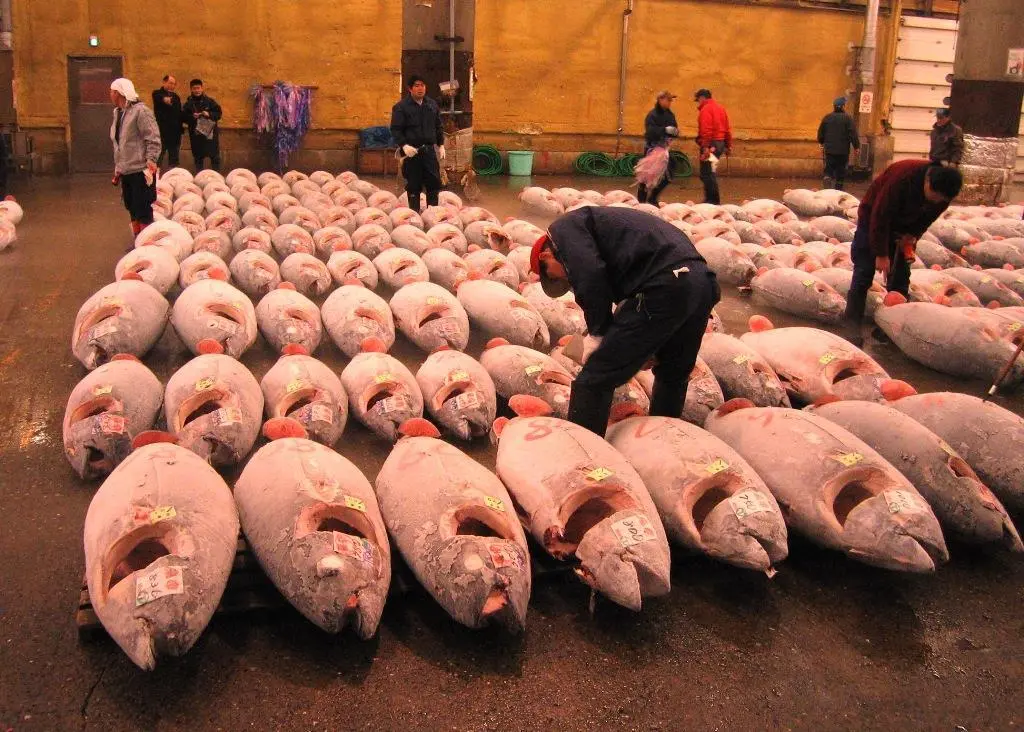
This comes in the wake of Tokyo’s Tsukiji Fish Market start-of-the-year tuna auction. Bluefin tuna stocks are decreasing, and if the situation worsens, the auction may come under threat.
Other fish are facing similar risks, and Japan’s fishery and seafood self-sufficiency rate continues to decline. A total allowable catch (TAC) system is currently applied to fish including saury, mackerel and true sardine and last year the country put a non-compulsory cap on catches of bluefin tuna less than 30kg in six fishing blocs. It is now planning to strengthen these efforts. The government also wants to stabilise market prices – saury and mackerel prices have been fluctuating wildly, depending on catch volume and fish size. The government plans to stabilise Pacific saury stocks in waters around Japan by narrowing price fluctuations.
Meanwhile, aquafarming technology is being seen as another way of preserving fishery resources. One example is full-cycle bluefin tuna farming where, instead of using wild fish, researchers artificially inseminate, hatch eggs and grow tuna in captivity, although the total volume of farmed tuna is not enough to meet demand. Other researchers are producing catfish that taste like eel, to address declining eel stocks.
Related Articles
 FISHERIES
 FISHERIES
 WORLD FISHING EVENTS