






Bio robots for Indian Ocean research
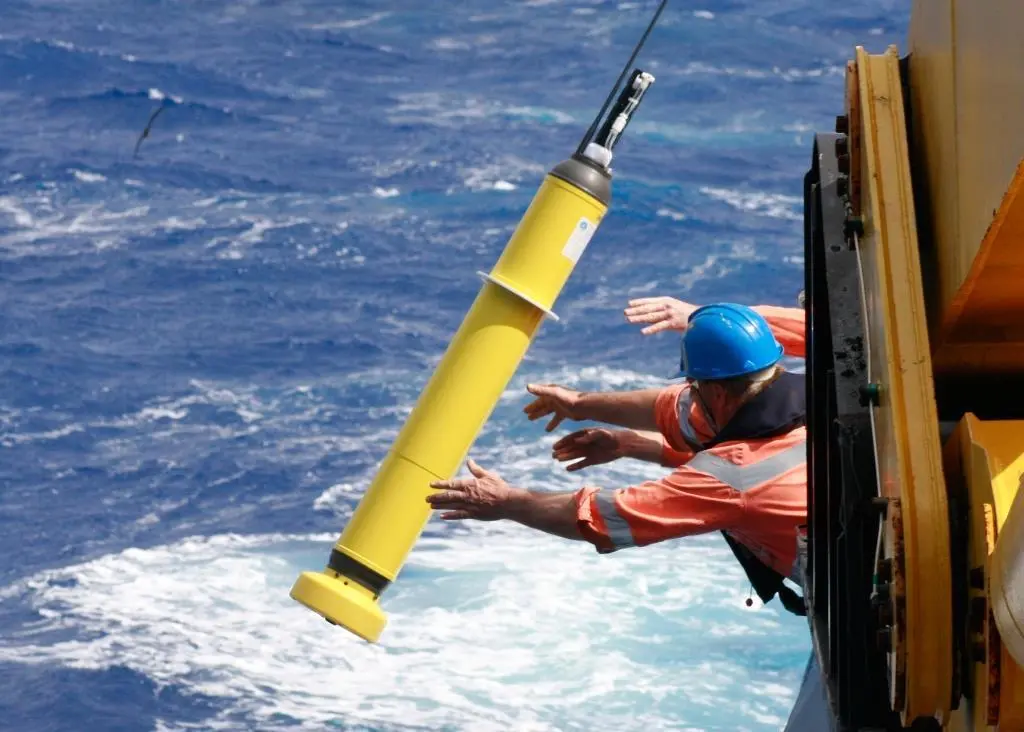
Robotic floats armed with revolutionary new sensors will be launched in the Indian Ocean, as part of a new India-Australia research partnership to find out more about the worlds third largest ocean.
The Indian Ocean contains vast fisheries and mineral resources that are of strategic importance to both Australia and India. It also plays a direct role in driving the climates of its surrounding regions.
The new ‘Bio Argo’ floats, to be launched in mid 2014, will enhance the already successful Argo float technology to measure large-scale changes in the chemistry and biology of marine ecosystems below the Indian Ocean’s surface.
The Argo floats are a network of 3600 free-floating sensors, operating in open ocean areas that provide real-time data on ocean temperature and salinity.
The ‘Bio Argo’ floats will include additional sensors for dissolved oxygen, nitrate, chlorophyll, dissolved organic matter, and particle scattering. They will target specific gaps in the understanding of Indian Ocean ecosystems of immediate concern to India and Australia, such as the Bay of Bengal and the waters of north Western Australia.
Dr Nick Hardman-Mountford from the Commonwealth Scientific and Industrial Research Organisation (CSIRO) said the pilot project, led by CSIRO in collaboration with the Indian National Institute of Oceanography (CSIR-NIO) and the Indian National Centre for Ocean Information Services, will improve understanding of cause and effect in the Indian Ocean’s climate and ecosystems.
“By studying the Indian Ocean in this detail, we can investigate the origin and impact of marine heatwaves like the one that devastated the coral reefs and fisheries off north Western Australian in 2011 – and improve our prediction of them in the future,” said Dr Hardman-Mountford.
Related Articles
 FISHERIES
 FISHERIES
 WORLD FISHING EVENTS