


Balancing political fish logs at home and abroad
Q. This year, 89% of the Irish Sea fleet will be free of the ‘days-at-sea’ system. The overall quota for Ireland has increased 8% over last year. All this seems to be a successful achievement at a time when the trend in Europe is towards more cuts and restrictions. Were the negotiations, hard?
A. The negotiations at the December Council were very tough, but that is what you expect when you are a marine or fisheries minister. I believe if you do your homework in advance, meet with as many other colleagues who sit around the table, it is possible to make progress. In the lead up to the December talks [the 2004 TACS and quota council meeting in Brussels] there were a number of issues facing Ireland. I travelled to many of the key European capitals to sit down and talk with my counterparts.
In an environment like that, it is possible to make progress. I am content with what was achieved at the December Council against a tough backdrop. We have a balancing act to achieve — balancing the need to sustain fishing while ensuring that stocks are conserved for future generations.
I took up the post of Marine Minister in Ireland in June, 2002. It was something of a baptism of fire, in that the December Council of that year was probably the hardest negotiations I had had to face. We had the very difficult position facing us of the question of the Irish Box.
Q. As President of the European Council, what initiatives are you proposing for the European fishing industry?
A. The Irish Presidency has three clear priorities [on] the heavy agenda. The first is the adoption of the Regulation on the Regional Advisory Councils (RACs), a central plank of the Common Fisheries Policy Reform adopted in 2002. The second is to respect the deadlines for implementing the “Western Waters” Regulation. The third concerns giving fresh impetus to the development of environmentally friendly fishing methods.
Q. In 2003, the Irish government saw fishing vessels worth millions being built without the owners being sure of getting a license to fish. How this could be possible?
A. The position has been for many years, and remains today, that fishermen are advised before entering financial commitments, to seek a licence offer for the vessel they propose to enter the fleet. When they are in receipt of a licence offer they can proceed and, when the terms and conditions of the licence offer are met, they will receive a licence in line with the original offer. Since [taking up] office I have also reformed the situation by establishing an independent licensing authority, an independent appeals process and a transparent published policy.
Q. What effects will EU enlargement have on the European fishing industry?
A. Enlargement will have implications for how we work and cooperate. It will mean implementing the Council’s ‘code of conduct’ to be more efficient and effective in our daily work. It will mean listening carefully to understand the concerns and priorities of our new colleagues. It will mean being more imaginative in finding solutions and more creative in finding common ground to reach compromises. The Irish Presidency will strive in all of these areas.
Enlargement will also have practical policy implications. Strengthening control is an important challenge for the Community and is being given priority under the new Common Fisheries Policy (CFP) framework. The Presidency will work towards a [formal] Decision on a Community financial contribution towards member states fisheries’ control programmes. These provisions provide important funding for member states [to] promote actions that focus attention on forms of control that are particularly effective and promote the application of uniform controls across the Community.
New seas
A. The number of EU member states around the Baltic will double from four to eight. Technical measures for the Baltic will have to be adopted to underpin the sustainable exploitation of fisheries in those waters. These waters will now [additionally] be shared by the EU and Russia with implications for the International Baltic Sea Fisheries Commission. The future of this organisation will have to be agreed, probably next autumn.
A key step in this process, however, may be negotiations with Russia on a bi-lateral fisheries agreement. These have been frozen for over a year but seem now to be moving forward. Finalising such negotiations would be a major fisheries policy development. This is particularly important in the context of the impact that Enlargement will have on our overall relations with Russia.
Enlargement will also have an impact in the Mediterranean with the accession of Malta and Cyprus. This will range from the EU’s role in the International Commission for the Conservation of Atlantic Tunas (ICCAT) to the adoption of technical measures in the Mediterranean or to the simple fact that the RAC for the Mediterranean will cover six Member States instead of four.
Q. What are your views on the reform of the CFP?
A. One of the key issues facing us is the sense of ownership of the CFP. I believe we need to get all the stakeholders to buy into the future and the CFP. One way to do this is through the implementation of the RACs [which] are so important. They will provide a forum where all the stakeholders can come together in a spirit of cooperation. A process of dialogue in the context of RACs should gradually lead to greater mutual understanding and trust. Stakeholders’ experience will form a critical element in policy formulation through the RAC process and should increase the sense of “ownership” amongst stakeholders [in] the CFP.
Q. What do you think about joint ventures between European and Third World countries?
A. In terms of southern fisheries agreements, the first [six months] of 2004 will witness the launch of negotiations for a new protocol to the important EC/Angola Fisheries Agreement. We hope these negotiations, and those for a new tuna agreement with Tanzania, will be finished during the Irish Presidency. The latter agreement would be very beneficial to our long-distance fleets. Ultimately, any joint venture has to be on an equal footing. There can be no sense of exploitation [and] we need to focus on development, assistance and partnership.
Q. Is commercial fishing in EU costal waters dead?
A. No I don’t believe it is. We need to ensure that we operate in partnership with all the stakeholders. We have a duty to future generations in terms of fish stocks. We have a duty of care to ensure that all fishing is sustainable. That is an intrinsic part of my task. We have to ensure that we heed the advice of the experts; we [must] put regeneration and recovery plans in place and yet we [must also] provide a viable future for fishing communities.
Q. What is your view on sustainable fisheries?
A. As I have stated, the only future is sustainable fishing. When I addressed the European Parliament fisheries committee in Brussels on my Presidency goals, I stressed the importance of environmentally friendly fishing. Quite simply, we have to balance the needs of fishing communities and their livelihoods and the fact that, unless we protect stocks, there will be no meaningful future. We hold fish stocks in trust for future generations.
Q. Is deep sea fishing the future of the industry?
A. It is part of the future but I believe traditional fishermen who operate in coastal waters must also play a vital role. With advances in technology and ship design, our ability to fish further and deeper is being enhanced. But I would caution that we need to [be clear] that we can’t abandon our traditional fishermen.
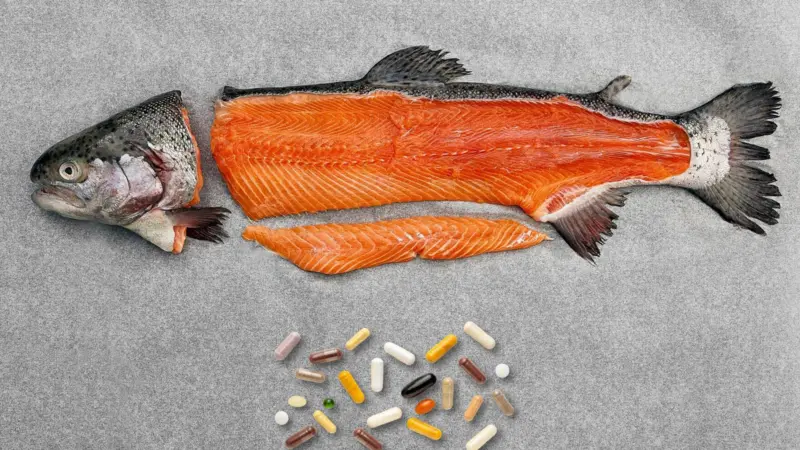
Q. After the latest debate over the health risks of eating farmed salmon, can we expect fish farming to play an important role as a source of fish protein?
A. We have all heard the conflicting reports on farmed salmon. Is it safe? Is it not safe? I believe, with proper monitoring, safeguards and management that aquaculture has a very important role to play. It is still a fairly recent development when set against the years of traditional commercial fishing. We are still learning; our methods, healthcare and management skills are improving. On aquaculture, I hope the Council can adopt, at an early stage of the Presidency, the proposal recently put forward by the Commission to strengthen… protect and promote [aquaculture] development in an environmentally sound way.
We need to retarget our funding to fulfil the potential of aquaculture: to ensure the recovery of threatened species and relieve the pressure on certain fish stocks; to provide an important supplementary source of fishery products that are healthy, safe and of good quality while promoting high animal health and welfare standards, and to maintain and create long-term, secure employment in fishing-dependent and less developed rural areas.
Q. What initiatives should governments take to support the fishing industry?
A. This is one of the three key areas that we are tackling during our Presidency. I believe my initiative on environmentally friendly fishing is very important in that we need to get across the message that governments and industry are on the side of sustaining fish stocks. There is an awful lot of work going on ensuring recovery programmes are implemented. I don’t believe we inform the public enough about all the work that is being undertaken. Consumers need to have confidence in the product and confidence that, when they eat fish, they are eating a sustainable and renewable resource.
Q. Do you think scientists should take more advice from stakeholders when setting quotas and restrictions?
A. This is a two-way process and that is why the new RACs are so important. The councils will provide a meeting place for scientists and the fishing sector to discuss common objectives. It will also remove a sense of ‘them and us’, which has tended to exist. There is certainly a view among fishermen that scientists ignore what fishermen have to say. There is a view among fishing people that some of the scientists are living in ivory towers. Scientists believe that some fishermen are determined to exhaust stocks. There is a problem there, but I believe the advisory councils can play a vital role in eradicating it.
Related Articles
 PROCESSING & REFRIGERATION
 PROCESSING & REFRIGERATION
 PROCESSING & REFRIGERATION