


Mediterranean, Black Sea countries align on aquaculture vision
Recognising that aquaculture is becoming increasingly vital for food security, employment and economic development in the Mediterranean and Black Sea region and that the sector has experienced strong growth in recent years, the General Fisheries Commission for the Mediterranean (GFCM) of the Food and Agriculture Organization of the United Nations (FAO) has outlined a shared vision for the delivery of a sustainable industry.
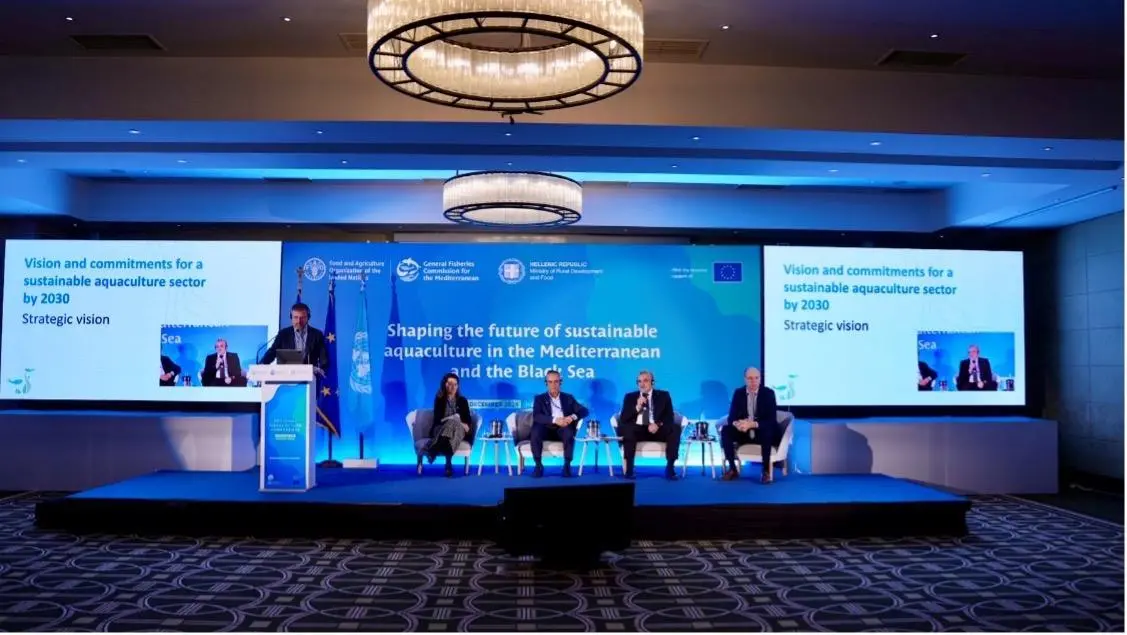
Representatives from over 30 countries recently gathered in Heraklion, Greece, for the largest regional aquaculture conference in the region. Titled “Shaping the future of aquaculture in the Mediterranean and Black Sea Region”, this two-day event was organised by the GFCM and the Government of Greece, with the financial support of the European Union.
The conference provided a forum to review the progress achieved since the inaugural regional conference held 10 years ago in Bari, Italy, and discuss how to embrace innovation and sustainability, boost resilience and unlock the full potential of aquaculture in the region, in pursuit of the objectives, of the GFCM 2030 Strategy and beyond. Its new shared vision for the future takes into consideration major regional and global challenges, including rising global food insecurity faced by a growing population, climate change, pollution, biodiversity degradation and economic instability.
It was noted that over the past decade, the aquaculture sector has witnessed remarkable growth, with marine and brackish water aquaculture production soaring by 91.3% and revenues climbing by 74.5%.
“A new vision for the sustainable development of aquaculture is taking shape today. Let this conference mark a significant milestone in our journey. Building on its conclusions, we will reflect on how to best address challenges, ensuring that our actions benefit aquaculture and the local communities that depend on it,” said Charlina Vitcheva, Director General for Maritime Affairs and Fisheries, European Commission.
High-level decision-makers and stakeholders, including aquaculture experts and representatives from research and academia, international, intergovernmental and NGOs, producers and aquaculture farmer associations from across the region and beyond, shared ideas and experiences through a series of keynote speeches, panels and side events. Participants also included small-scale farmers, as well as the newly-created Network of Women in Aquaculture, born out of a GFCM initiative to empower women in the sector.
“Aquaculture is a pillar of development for our country and for the wider Mediterranean region. Through our convergences and decisions, we lay the foundations for a sustainable and resilient sector that innovates and respects its natural environment. I am confident that the cooperation of all stakeholders will help us make aquaculture a lever of innovation, sustainability and progress for our country and for the entire Mediterranean,” said Konstantinos Tsiaras, Minister of Rural Development and Food, Greece.
During the event, participants reviewed the progress made by the sector in the last decade, including the many national and regional advances towards enhancing the sustainability of the sector, such as the development of national aquaculture strategies and the increased engagement of farmer associations.
Among the highlights were the expansion of allocated zones for aquaculture from 30% to 73% and the development of environmental monitoring programmes from 23% to 60% .
“The strong representation of the regional aquaculture community at the conference is an important step towards the sustainable development of the sector. Our approach, at the GFCM, encompasses all dimensions of sustainability, from governance and social aspects to environmental stewardship and economic growth. Our countries have a shared vision for the future, deeply rooted in their common goals and aspirations, but also aligned with the realities aquaculture farmers face every day,” said Miguel Bernal, Executive Secretary at GFCM.
Moving forward, GFCM’s new priorities for progressing sustainable aquaculture by 2030 are:
- Enhancing food security remains a priority, reaffirming aquaculture’s role in providing accessible, affordable and nutritious food to meet a growing global demand, while supporting local economies and reducing reliance on imports
- At the same time, promoting ecosystem-based growth is crucial to support aquaculture practices that integrate ecosystem approaches, towards ensuring social and environmental resilience, while enhancing biodiversity and restoring marine ecosystems
- Additionally, strengthening governance and stakeholder collaboration is essential to enhance the harmonisation of regulatory frameworks with global standards and actively involve stakeholders, including small-scale producers and local communities, in order to foster equitable decision-making and cross-border cooperation
- The adoption of innovative practices, such as climate-adapted species, integrated multitrophic aquaculture and advanced systems to address climate change impacts and ensure long-term sustainability, is also an important driver to further promote climate resilience and innovation
- Ensuring social responsibility and inclusiveness is critical to empowering local communities, prioritising gender equity, improving worker welfare, and promoting youth participation to create a more inclusive and socially responsible aquaculture sector
As countries in the region discuss the conclusions of the conference, it’s expected that these outcomes will guide the GFCM and its members in defining new national and regional strategic actions for the sustainable development of aquaculture, including in the context of the 2025 United Nations Ocean Conference and the next MedFish4Ever Declaration.
Related Articles
 AQUACULTURE
 AQUACULTURE
 AQUACULTURE