


First restorative aquaculture centre for the Mediterranean
Restorative aquaculture in the Mediterranean and Black Sea region has been boosted with the announcement of the first Mediterranean Restorative Aquaculture Centre in La Rapita, Catalonia, Spain. Due to open by the end of 2024, this innovation and capacity-building centre will be the first of its kind in the region.
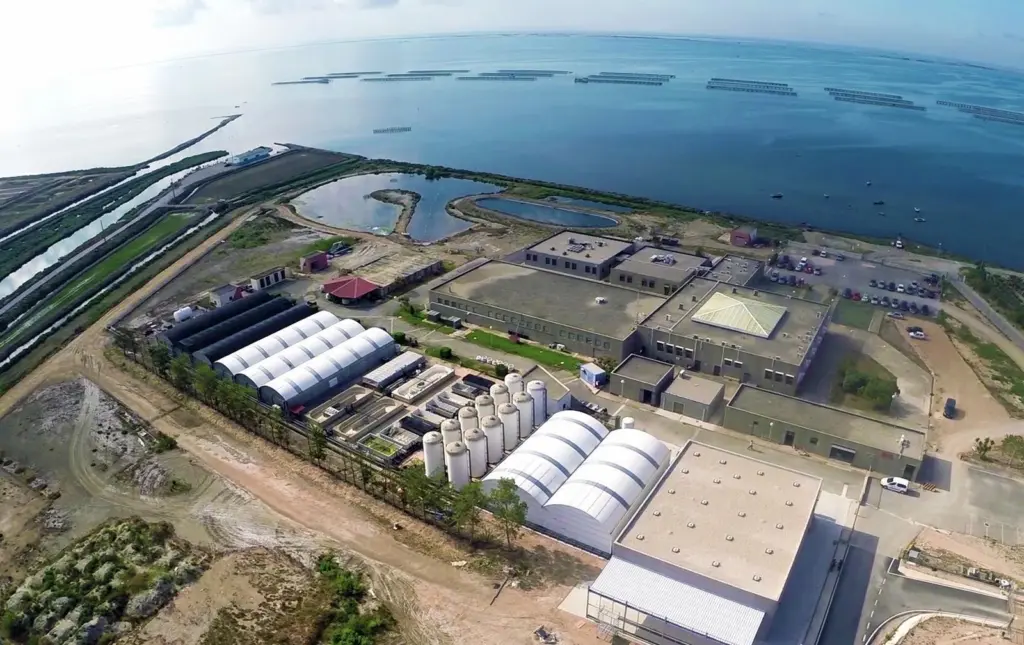
The centre was presented at Seafood Expo Global (SEG) in Barcelona and is the result of collaboration between the General Fisheries Commission for the Mediterranean (GFCM) of the Food and Agriculture Organization of the United Nations (FAO) and the Generalitat de Catalunya, Departament d’Acció Climàtica, Alimentació i Agenda Rural (DACC), with support and infrastructure provided by the Institute of Agrifood Research and Technology (IRTA).
According to GFCM, aquaculture is an important driver for food security, employment and economic development, and practices known as restorative aquaculture hold strategic importance as a tool to positively affect ecosystems services – offering ecological benefits, creating opportunities for local communities and addressing climate change through adaptation and mitigation strategies.
A diverse range of activities fall under its umbrella, including the production of algae, sea urchin farming and roe enhancement, bivalve farming, integrated multitrophic aquaculture systems and restocking.
Combining traditional knowledge with advanced technologies, the Mediterranean Restorative Aquaculture Centre aims to reshape the aquaculture sector, thus ensuring the long-term viability of aquatic ecosystems and the communities relying on them. It will provide state-of-the-art facilities and expertise for knowledge exchange, research and development of sustainable aquaculture practices.
More specifically, the centre will enable innovation and capacity building in the region on the farming of species such as macroalgae, sea urchins, bivalves and holothurians, as well as on integrated multi-trophic aquaculture systems and adaptation to climate change.
Furthermore, the initiative will facilitate sustainable aquaculture development among producers and interested companies by fostering the exchange of technical guidance, expertise, and experiences among stakeholders in the Mediterranean region. It will contribute to developing knowledge and capacity for restorative aquaculture and promoting innovation and the ecosystem services of the sector among relevant stakeholders.
“We are honoured to host the Mediterranean Restorative Aquaculture Centre, given the commitment of the Generalitat de Catalunya to promote the sustainable development of aquaculture and the strengthening of ecosystem services in the Mediterranean,” said Sergi Tudela, Director General of the Direcció General de Política Marítima i Pesca Sostenible at DACC.
”The opening of Mediterranean Restorative Aquaculture Centre as an innovation and capacity-building centre is a very important milestone for our region. Within the framework of the GFCM 2030 Strategy, it aims at increasing and sharing knowledge on aquaculture resilience in the face of climate change,” added Miguel Bernal, GFCM Executive Secretary.
“For our Institution, the centre will provide an opportunity to create a bridge between scientists and companies in both shores of the Mediterranean Sea,” said Josep Usall the General Manager of IRTA.
One example of restorative aquaculture activity, already planned for the facility, is macroalgae culture, which is underdeveloped in the Mediterranean. The centre will be able to assist towards regenerating the marine environment through the ecosystem benefits it provides, as well as promote the diversification of the aquaculture sector and its adaptation to climate change.
Related Articles
 AQUACULTURE
 SEAFOOD
 SEAFOOD