

Investigation: Systemic illegal driftnet fishing occurring in Moroccan waters
Moroccan fishing vessels are persistently using illegal driftnets in the Alboran Sea, a critical Mediterranean biodiversity hotspot home to some of the world’s most vulnerable marine species, according to a new Environmental Justice Foundation (EJF) investigation. The NGO said this indiscriminate and destructive fishing is a serious threat to vulnerable wildlife and violates numerous fisheries laws.
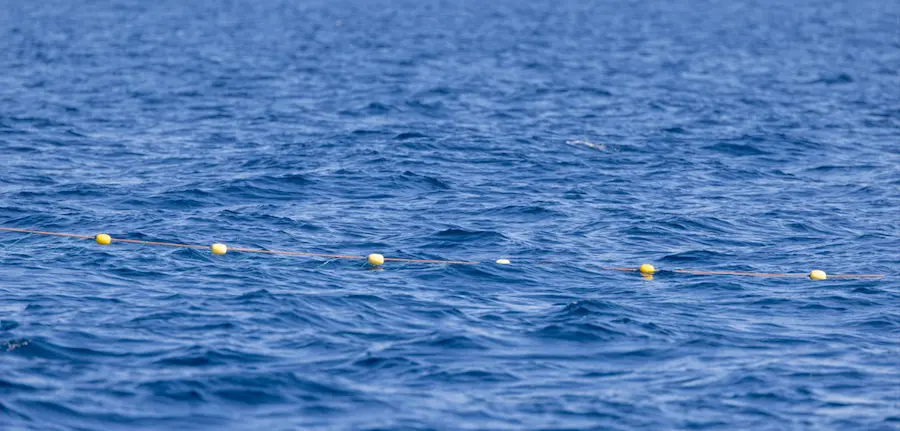
EJF explained that while driftnets primarily target large pelagic species such as the critically endangered Mediterranean swordfish, these nets, which can stretch for tens of kilometres, also trap endangered whales, sea turtles, and sharks. Furthermore, when abandoned or lost, these nylon nets can become “ghost nets”, killing marine life for years and contributing to plastic pollution.
While driftnets are banned by international, regional and Moroccan law, EJF’s investigation found driftnet fishing continues openly and may even be increasing.
It highlighted that as recently as April 2024, nets were observed in Moroccan ports, and vessels using them were actively operating in both Moroccan and Spanish waters in the Alboran Sea.
“Our findings expose a systematic breach of national and international driftnet bans and a failure by Moroccan authorities to enforce them. With the use of illegal nets more than doubling, from 370 vessels in 2004 to 846 in 2024, this threatens the rich marine biodiversity of the Alboran Sea and could undermine broader efforts to safeguard Mediterranean biodiversity and fisheries, including by Morocco,” EJF CEO and Founder Steve Trent said.
“We urge Morocco to improve its surveillance and control of illegal activities and, through cooperation and assistance from the EU, support fishing communities to sustainably transition away from the use of driftnets by the end of 2025. By ending illegal driftnetting, we can protect marine wildlife, the ocean and the coastal communities that depend on it.”
EJF also noted that in addition to the limited enforcement of driftnet fishing bans and local economic hardship, high foreign demand for swordfish is a key driver of the continued use of driftnets by the Moroccan fleet.
In 2022, Morocco ranked as the fourth-largest supplier of fish products to the EU by value, with nearly all Moroccan swordfish destined for export, primarily to Spain.
Spain, accounting for nearly 79% of Morocco’s swordfish exports, is the main EU supplier of swordfish products, a significant portion of which is likely re-exported from Spain. Italy remains the largest EU market for Spanish swordfish exports, representing 84% of the trade by value.
“The continued demand for Moroccan swordfish, especially from the EU, remains a primary driver behind this illegal fishing,” EJF Ocean Campaigner Jesus Urios Culiañez said. “The EU and its member states, particularly Spain and Italy, need to take the responsibility of closely inspecting the imports. This will ensure illegally caught fish does not end up in the EU market and EU consumers are not complicit in the environmental destruction of the Mediterranean.”
EJF’s investigation also learned that while Moroccan driftnet fishers understand the environmental damage and illegality of driftnet fishing, they want government support to switch to alternative gear. In addition to suggesting alternatives, Moroccan fishers and civil society are calling for direct dialogue with authorities. This, the NGO says, would allow fishers to voice their concerns and share critical information to help facilitate a transition away from driftnet fishing.
The research points to what the EJF calls an “evolving profile” of driftnet vessels: where once larger industrial and semi-industrial vessels dominated, small wooden boats (5-10 metres long and around 3 gross tonnes) are now using driftnets, without being subjected to any form of regulatory control.