
OMC 2016 finishes on a high
More than 110 delegates from nearly 30 countries participated in the 2016 Offshore Mariculture Conference; fish farmers, NGOs, scientists, researchers, service suppliers, manufacturers and entrepreneurs were all in attendance.
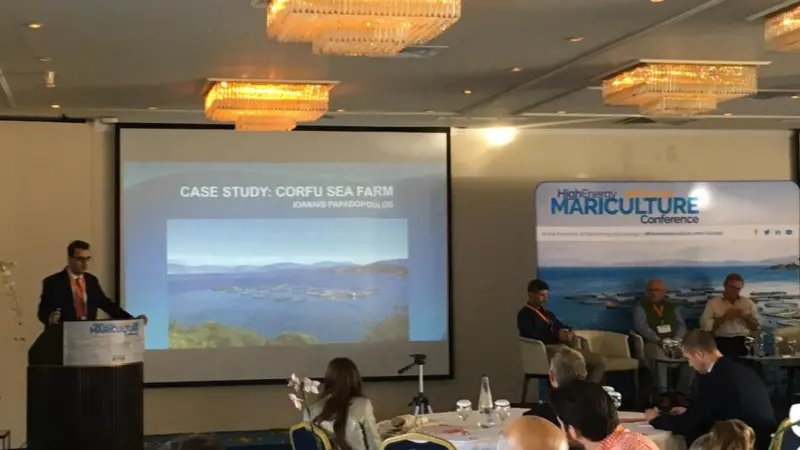
OMC 2016 was opened in Barcelona on 6 April by Conference Chairman Alessandro Lovatelli, Aquaculture Office for the Food & Agriculture Organization of the United Nations (FAO). Bernardo Basurco de Lara, Vice-President, Sociedad Espanola de Cuicultura, welcomed everyone to the Conference and to Barcelona, before going on to highlight that, while the economic crisis seen in Europe over the past few years has had an impact on Spain’s aquaculture industry, the sector has shrunk from around 70 active cage farms in Spanish waters in 2008, to 46 in 2014 – production capacity on those farms has risen in that time, he added.
An ocean of opportunity for offshore aquaculture
Ernesto Penas Lado, Directorate A – Policy development and coordination DG Mare, then took up the reins by stating that the conference comes at a time when expanding aquaculture to offshore areas is becoming increasingly practical. Lado went to to say that, even with few offshore developments, the EU aquaculture sector employs around 85,000 people and is worth between 3.5 and 4 billion euro to the economy each year. Although a small component of overall maritime economy, aquaculture is one of the five pillars of the EU’s Blue Growth strategy, the maritime component for achieving smart, sustainable and inclusive growth in the Union. Aquaculture has a high profile in the Strategy because it has the potential to deliver sustainable jobs and growth. A large amount of this untapped potential lies offshore. Until recently the costs of technology and the economic incentive associated with moving offshore were not aligned, but this is changing rapidly.
Communicating the importance of fish, and aquaculture
After the first full day of presentations and extensive question & answer sessions, delegates took the opportunity to relax at the Conference Dinner held in La Gavina restaurant, in the restored Palau del Mar building at the foot of the Mediterranean Sea. With the weather delegates were able to enjoy a fantastic meal on the first evening of the 2016 Offshore Mariculture Conference, in a beautiful setting.
The second day of the conference kicked off with un update from an old friend of OMC, Neil Anthony Sims, on the Velella project, which is still waiting on permits to be granted for the latest iterations of the Velella Project. Sims hopes the Delta version can go to sea this year. The Delta will be a larger version of the Gamma; a submersible pod attached to a single mooring point off the coast of Hawaii (though still close enough to be within wireless range, allowing remote feeding and monitoring). The plan is for the Delta to contain a greater number of fish in a larger pen, around 15,000.
To round off the day, delegates were given an insight into IRTA’s Aquaculture Program by Director, Dolors Furones Nozal, who highlighted the scope of the programme and it’s aims which includes knowledge and technology transfer to increase the number of species cultured and/or improve the existing processed from the production and food safety points of view.
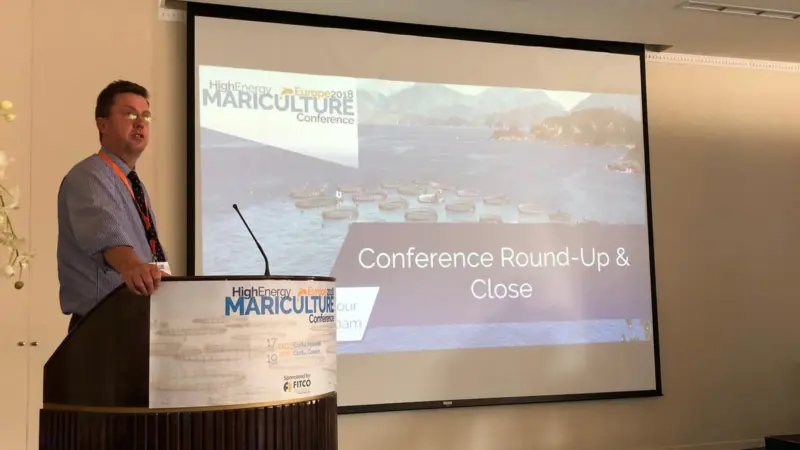
In summing up Chairman, Alessandro Lovatelli, stated that time should be spent telling people what aquaculture is and the nutritional importance of fish – we need to communicate with the public so that they understand that if we want fish on our tables we have to farm it.
Asia is the hub in terms of quantity, and it needs to intensify with more fish per cubic metre of water. In Africa the potential is there and is coming on slowly – there is a lot of interest to develop their aquaculture industry, which will create business opportunities. The Middle East has a lot of dessert so they are interested in going offshore; Iran being the most active country. The Middle East is moving fast; they need help but they are focused. This is not for the export market, it is for food security and, of course, China is a big and powerful market. The EU is struggling because there are a lot of products on the market but when it comes to aquaculture it is only focussed on sea bass and sea bream. But customers want different products so the industry has to develop.
What was heard over the two days was that the industry has really progressed. There is a 1:1 food conversion now and feed development has moved very fast.
Aquaculture can have very little impact on the environment – if done properly and these points NEED to be communicated effectively to the people. They need to be continually reminded of the importance of aquaculture but no single company can do this, governments need to get involved.
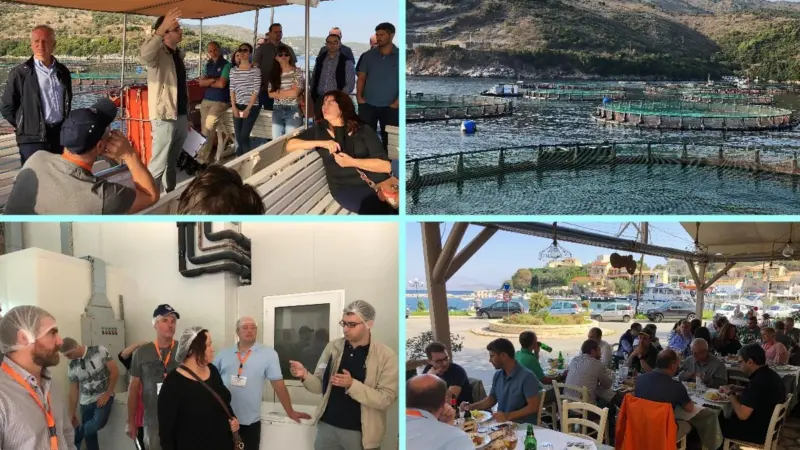
The third day saw delegates visiting the Mercabarna fish market and the IRTA research facility, details of which can be read here.
For further information and to find out how you can participate in the 7th Offshore Mariculture Conference, contact the Events team on +44 1329 825335 or email conferences@offshoremariculture.com.