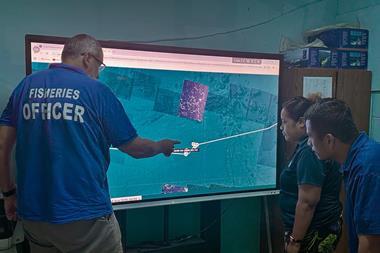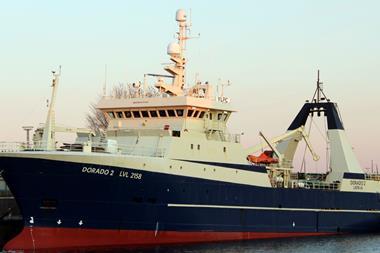



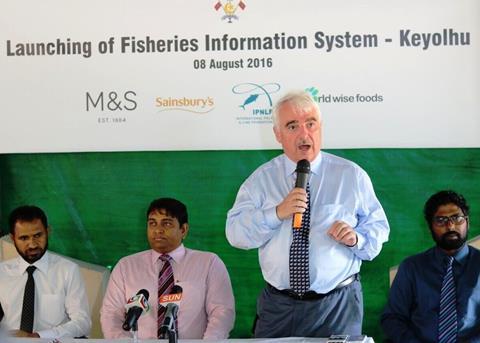
The International Pole & Line Foundation (IPNLF) has launched a new Fisheries Information System (FIS) for one-by-one tuna fisheries in the Maldives.
This unified and integrated web-enabled database will allow the Maldives’ one-by-one tuna fisheries to fulfil all the latest international traceability requirements with regards to catch and vessel reporting.
Work on the FIS began in July 2012 after the implementation of the EU Regulation to prevent, deter and eliminate illegal, unreported and unregulated fishing (IUU) entered into force on 1 January 2010, which together with the successful Marine Stewardship Council (MSC) certification of the skipjack tuna pole-and-line fishery in 2012, placed new demands on fisheries data capture in the Maldives.
These developments required the tracking and supply of new fishery information previously not collected. In order to fulfil such needs, the Ministry of Fisheries and Agriculture (MoFA) introduced logbooks and the requirement for fishermen to complete entries for every fishing trip, with this information going directly to the Ministry. Because of the significant additional burden placed upon the logbook software that was in place at that time, the decision was taken to build a new dynamic system capable of meeting the fisheries’ needs for many years to come.
The FIS was developed through generous support from the non-profit IPNLF and its members Marks & Spencer, Sainsbury’s and World Wise Foods. Significantly, this backing also enabled the hiring of a database specialist to work full-time at the Marine Research Centre of the Ministry of Fisheries and Agriculture, along with staff involved in data acquisition and compilation.
Speaking at the FIS launch, IPNLF chairman, John Burton, said, “The Maldives has been one of IPNLF’s biggest priorities from the outset. Today, we’re working closer than ever with local fishing NGOs, government, scientists and the commercial industry to ensure the country’s traditional one-by-one fisheries continue to be managed as responsibly as possible, while providing sustainable employment for Maldivian fishing communities.”