



Greenpeace has released a new report “Until the Last Fish – the Absurd Model of Deep Sea Fisheries” outlining how the EU Common Fisheries Policy subsidies allow the continuation of bottom trawling.
Greenpeace says that deep sea bottom trawling “is one of the worst fishing practices in Europe, yet is paid for by European tax-payers.” Greenpeace Spain oceans campaigner Cela Ojeda said, “This indiscriminate fishing method kills vast numbers of fish and other animals in order to catch just a few target species. In the North East Atlantic 100% of the deep sea stocks are overexploited, according to independent scientists and on average, between 30% and 60% of the contents of a bottom trawl net are thrown back overboard as bycatch, dead or dying.”
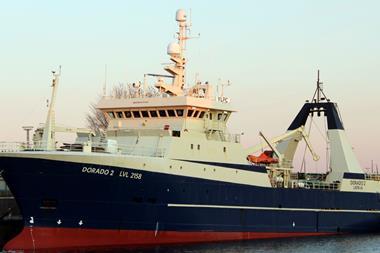
The report details economic data on deep sea bottom trawl fleets fishing in the high seas, which Greenpeace says proves the profit achieved by such vessels is no more than 10% of landed value, despite the significant subsidies received.
According to available figures, Greenpeace has estimated that Spanish deep sea bottom trawling fleets have received at least €142 million in subsidies in fifteen years, from 1996 to 2010. However, they say that the payouts identified are very likely an underestimation of the real cost of the subsidies. For instance, the calculation does not take in account the fuel tax exemption for the fishing sector. According to the report, these numbers mean that EU member states, and primarily Spain and France, have subsidised a destructive fishing practice with taxpayer money, despite the fact that they were aware of the decline of deep sea species stocks.
“If Spain and France continue with this practice, it is expected that less than 10% of fish stocks will remain at sustainable levels in 2022,” says Ojeda. “EU governments are failing to manage fisheries for the future – but the reform of the Common Fisheries Policy (CFP) gives them an opportunity to do so.”
Greenpeace is calling for European governments overseeing the coming review of the CFP to:
- Reduce overcapacity, by first decommissioning vessels that are the most destructive to habitats and stocks, and eliminating wasteful fishing practices such as deep sea bottom trawling.
- Reform the subsidies policy so as to end harmful subsidies, prohibit the support of measures that enhance fishing capacity; and ensure investments in restoring and maintaining stocks and the health of marine ecosystems.