



Will global warming benefit Pacific cod?
Warming seas may increase the spawning habitat of Pacific cod, according to new research by NOAA.A collaborative study between NOAA and the University of Washington has shown that the spawning grounds in the Bering Sea will expand upwards and eastwards as climate change causes seas to warm.However, the northern Bering Sea will likely remain too cold for successful spawning even by the end of the century.
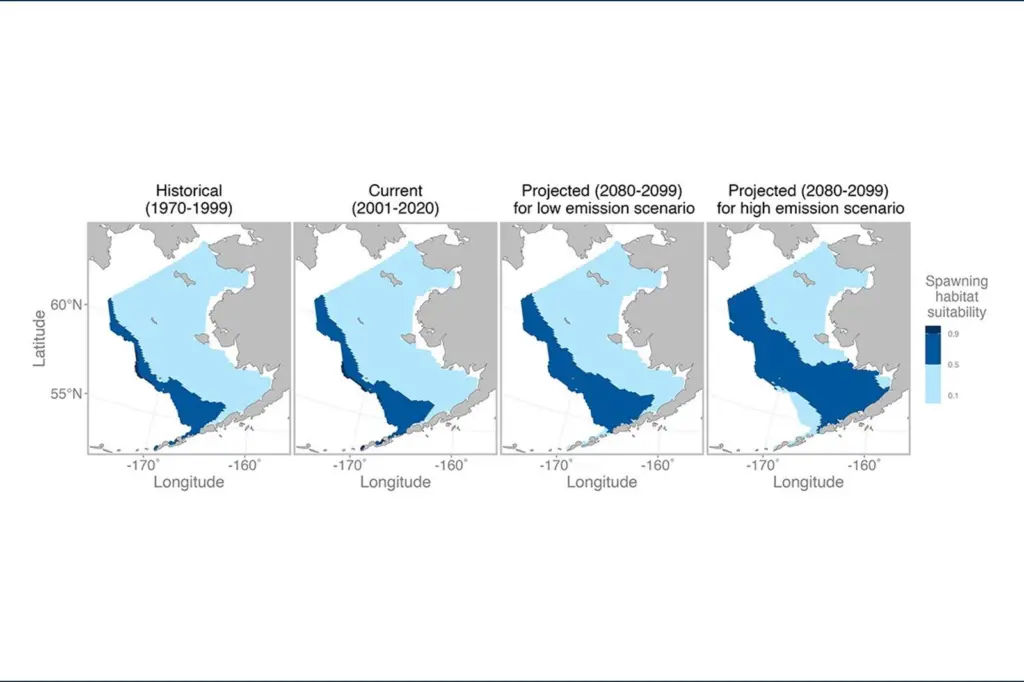
A collaborative study between NOAA and the University of Washington has shown that the spawning grounds in the Bering Sea will expand upwards and eastwards as climate change causes seas to warm.
However, the northern Bering Sea will likely remain too cold for successful spawning even by the end of the century.
“Understanding how warming will affect spawning habitat is a critical step in predicting and mitigating the effects of climate change on Pacific cod populations and fisheries,” said Jennifer Bigman, NOAA Fisheries Alaska Fisheries Science Center.
Experiments in the lab have shown that Pacific cod eggs are very sensitive to heat changes. Whilst juveniles and adults can tolerate a much wider temperate range, eggs can hatch only in a very narrow thermal window.
Pacific cod is moving north as seas warm so scientists set about studying whether they could successfully reproduce in these altered habitats.
Using bottom temperature historical readings and forecasts to predict suitable spawning habitat from 1970 to 2099, the researchers found that current grounds would become too warm and instead the grounds would shift northward and eastward, expanding as they did so.
“Warming will actually increase the amount of habitat where Pacific cod can spawn and hatch in the Bering Sea,” said co-author of the study, Lauren Rogers. “In some ways it’s a good news story.”
The researchers sounded a note of caution, however. Spawning is not simply about temperature; oxygen levels, water movement, food and refuge from predators all play a part in the successful survival of a species and moving habitats will also affect where and how people fish.
Related Articles
 FISHERIES
 FISHERIES
 FISHERIES