




Senegal issued with IUU fishing yellow card
The European Commission has issued a so-called “yellow card” to Senegal, with the West African country informed that it needs to step up its actions in the fight against illegal, unreported and unregulated (IUU) fishing.
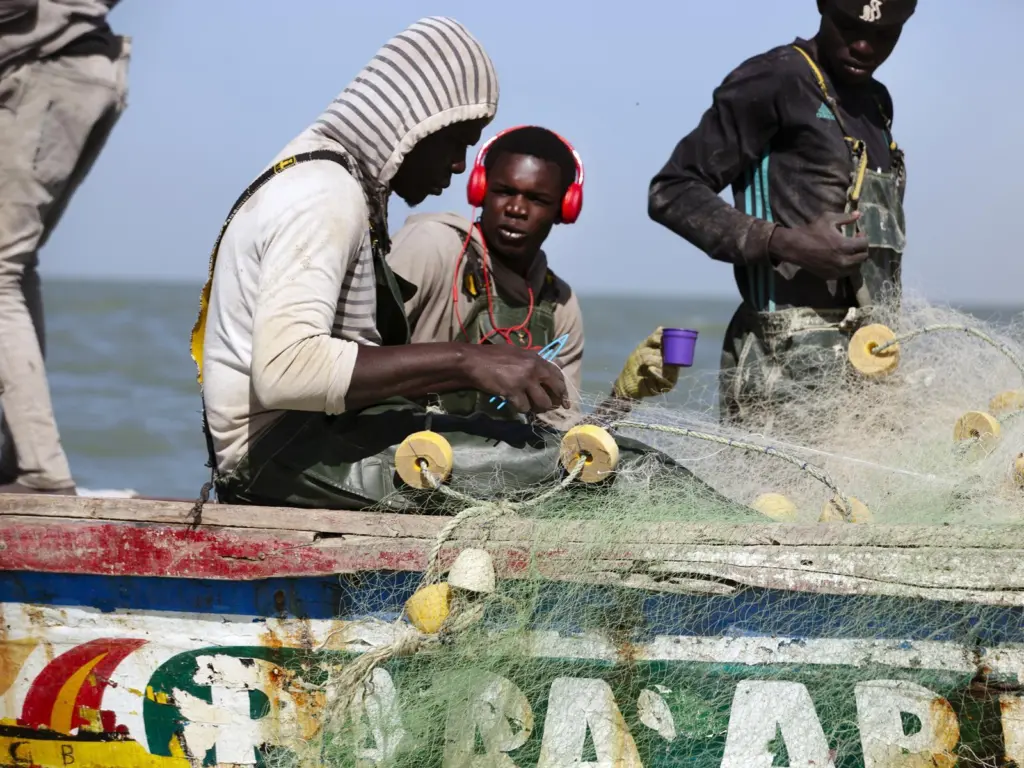
In the framework of the EU’s commitment to fight IUU fishing worldwide and as a consequence of several years of deficiencies and lack of cooperation, the Commission pre-identified Senegal as a non-cooperating country in the fight against IUU fishing. Its decision is based on serious shortcomings detected over the last years in the system that the country has put in place for compliance with its international obligations as flag, port, coastal or market state.
Deficiencies identified in the monitoring, control and surveillance systems of Senegal relate to vessels flying the flag of Senegal and operating in waters outside the country’s jurisdiction, as well as in the controls carried out on foreign fishing vessels at Dakar port. In addition, illegal exportations from Senegal to the EU market have been detected, which undermines the reliability of the traceability system upon which the certification of the legality of the fisheries products is based. It was also determined that Senegal has so far not demonstrated sufficient willingness to cooperate with the Commission in fighting IUU fishing.
“The European Commission is strongly committed to sustainable fisheries and efficient ocean governance. We have zero tolerance for IUU fishing and today we are taking action by giving Senegal a yellow card,” EU Commissioner for Environment, Oceans and Fisheries Virginijus Sinkevičius said.
The commissioner continued: “Senegal plays an important role in fisheries governance in West Africa. The Commission acknowledges the recent actions taken by the new government (i.e. publication of the list of fishing licences, and the audit of the fishing fleet) and it is reassured by this. Therefore, we stand ready to cooperate actively with the country in the fight against IUU fishing, and in particular to help the country remedy the situation and address the threats that IUU fishing poses to the sustainability of fish stocks, coastal communities, food security and the livelihoods of fishers who abide by the rules.”
With this decision, the Commission starts a formal dialogue with Senegal. Acknowledging the commitment of the new Government of Senegal to address the shortcomings, the European Commission has expressed its availability to support the country in the fight against IUU fishing.
At this stage, the decision does not yet entail any measures affecting trade. The yellow card offers Senegal the possibility to react and take measures to rectify the situation within a reasonable time. However, in cases of prolonged and continued non-compliance, countries can ultimately face a procedure of identification (red card), which entails sanctions, as, for example, the prohibition to export their fishery products to the EU market.
The global value of IUU fishing is estimated at €10-20 billion per year. Between 11 and 26 million tonnes of fish are caught illegally every year, corresponding to at least 15% of world catches.
Since November 2012, the Commission has entered in formal dialogues with 27 third countries, officially warning them of the need to take effective action to fight IUU fishing.
Related Articles
 FISHERIES
 FISHERIES
 FISHERIES