


Cross-border collaboration on microalgal research
A new cross-border Spanish and Portuguese collaboration aims to optimise the production and exploitation of microalgae across different sectors, including aquaculture.
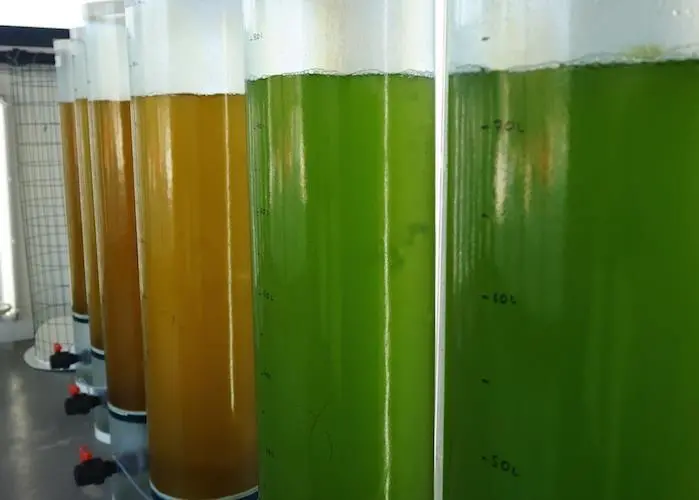
The ALGARED+ project will be implemented by a consortium comprised of nine institutions with interests in the areas of aquaculture and biomedicine in the Algarve region in Portugal and Andalusia in Spain.
This two-year project, which ends in December 2019, seeks to increase the critical mass of microalgae biotechnology research centres and optimise the specific resources and infrastructure of each of the participating entities.
Planned project activities include the bioprospection and setting up of a trans-national collection of new strains of fast-growing microalgae and the development of innovative bio-products.
It will also be sought the increase of knowledge of key metabolical routes, implicated in nutrient assimilation, bio-energy production and synthesis of significant compounds by microalgae.
Co-ordinated by the University of Huelva (UHU), other participants include CTAQUA, IFAPA Centro El Toruño, the University of Córdoba and the Spanish National Research Council (CSIC) from the Spanish side. Portugal is represented by the University of the Algarve (UAlg), Necton, the Portuguese Institute for the Sea and the Atmosphere (IPMA) and Sea4US.
The project is framed within the INTERREG V-A cross-Border cooperation Programme between Spain and Portugal (POCTEP).
Related Articles
 AQUACULTURE
 SEAFOOD
 SEAFOOD