
Chile leads algae farming research
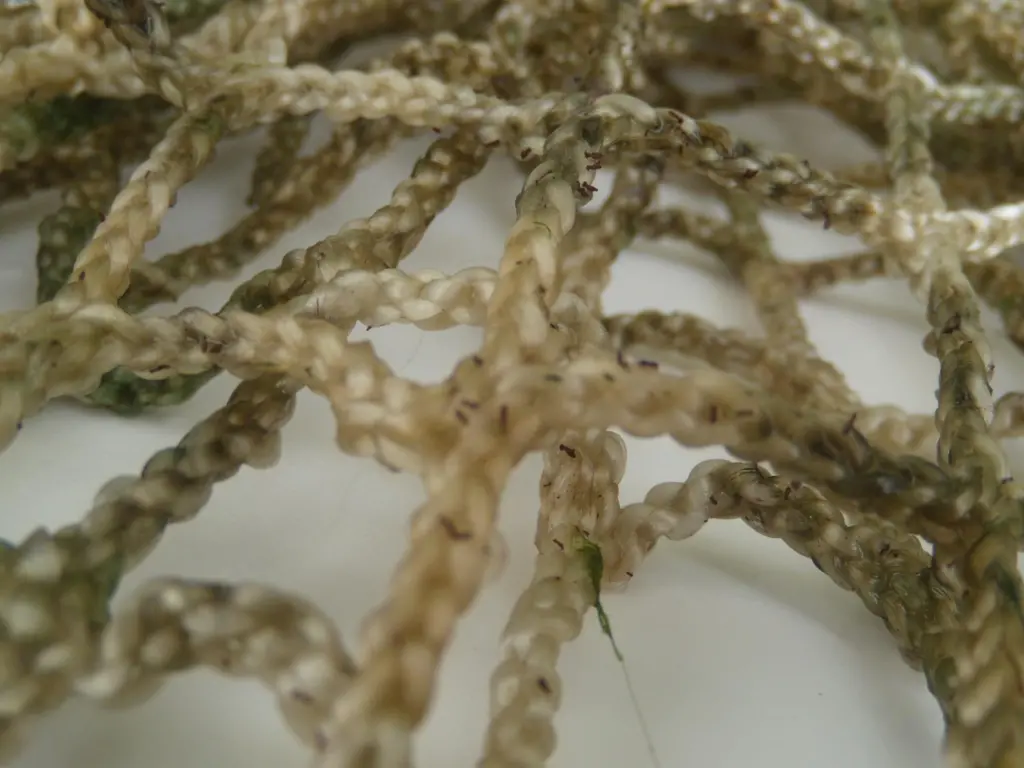
This targeted species is one of the most important cold water carrageenan producing algae species. It is an endemic South American species which provides raw material to three important Chilean producers which together supply over 29% of the world’s carrageenan needs.
So far, the raw material is only provided through the harvest of algae in the Tenth, Eleventh and Twelfth regions, while the fast growth of Chile’s carrageenan industry has increased the need of more algae in sectors further south.
This dependency on raw material contrasts with its Philippine counterpart, which in spite of being of lower quality than Chile’s carrageenan, is based on the farming of red algae of the species Kappaphycus and Eucheuma.
In the Chilean case, this dependency on natural sources of raw material in natural banks, added to the lack of regulations for algae harvest, could be a great hindrance in the case of an eventual scarcity of the raw material. Therefore, the farming of Gigartina algae should be the obvious strategy to be followed in order to assure the stability of the industrial supply of raw material.
Arturo Prat University leads research
Currently, researchers of the Arturo Prat National University’s (UNAP) Puerto Montt campus lead the pack in a project aimed towards increasing production and sale of the resource.
Knowledge developed so far will allow the university to offer the industrial community the technology for the production of seeds and baby plants, along with the technology for commercial growth in the ocean. Fortunately, this research has proven that the commercial growth of this resource is completely feasible, although the low growth rate in early stages of development may seem to be a bottleneck in biomass production if the project is projected towards a commercial scale.
The four main goals of this project are: to speed up the growth of juveniles in captivity; to identify important natural conditions, regarding depth and seasons, which are responsible of the growth of the resource; to enhance technology for the farming of Gigartina in the ocean by the management of farming systems for a better growth of plants; and to increase the quality of the agar they produce and transferring this technology to the productive sector thanks to the improvement of the generated technology.
As for this project’s economic importance, global benefits reach more than US$6.5m, opening new business opportunities to agents related to the carrageenan industry or algae farming and coastal fishermen and small algae farming enterprises. As for environmental aspects, the technology to be used implies the use of procedures and non-aggressive materials towards the environment and human health.
Los Lagos exports algae worldwide
The Los Lagos region hosts 45% of the country’s algae processing plants, considering algae drying plants and product obtaining plants. As for carrageenan, we may mention world leaders Danisco and Gelymar; the latter processes several types of algae in different forms, such as red seaweed, black seaweed and sea lettuce – all carrageenan producers.
Jaime Zamorano, Gelymar’s Operations manager, told World Fishing: “Due to the world’s financial crisis – mainly in the United States and Europe – during 2010 sales dropped for the first time in history, but after the three first months of 2010 we were able to observe a trend towards a recovery towards normal sales.”
Gelymar processes more than 5,000t of algae a year, obtaining raw material from collectors in the ports of Ancud, Tenaún, Dalcahue, Queilen and Quellón. Mr Zamorano commented: “As for carrageenan, sales have a great future. As a processing and exporting company, have several competitive advantages”, he explained.”
Clean Production Agreements
There is a Clean Production Agreement (CPA) between algae producers, aimed at enhancing good practices within the sector. Currently there are several companies taking part in this CPA, including Algas Marinas, Gelymar, Proagar, Neogel and Multiexport, which are permanently supported and receive technical assistance from the National Fisheries Service, Sernapesca, the Environmental Agency, Conama and the Production Enhancing Corporation, Corfo, among other Government agencies.
Agustín Krogh, executive secretary of the CPA Board in the Los Lagos Region, explained: “One of the CPA’s main objectives is to lower the amount of residues of the algae which enter the processing plants, which will help collectors, who will obtain better prices for the raw material (algae) with which they supply processing plants, as it will be much cleaner.”
Projects in Los Lagos
As for research on the red seaweed resource, the Fisheries Enhancing Institute (IFOP) is undergoing research within the project Evaluation of natural fields and sustainability strategies for red seaweed in the Tenth region financed by fisheries research funding by the Undersecretariat of Fisheries, aimed at creating a management plan for the resource..
Researchers at UNAP’s Puerto Montt Campus are working towards increasing the commercial farming and processing of the resource. This was confirmed by researcher and marine biologist Dr Eduardo Bustos, head of the university’s research department, who told World Fishing: “We have made great advances in this matter, but unfortunately funding for research is extremely low. Universities are the only entities which are undergoing research. In other countries the State supports research, but in Chile we are far from leading the pack in this matter.
“I’m convinced that the great knowledge obtained in our universities must be transferred to the community. What must be done is to select only a few species and to try and transfer them into the ‘new salmon’ – a very slow process”, he explained.
The greatest interest and work in this activity is carried out in the Los Lagos region, where 45% of the country’s algae processing companies are found, and where Danisco and Gelymar lead the activity.
The algae processing chain covers three areas, starting with collectors, who are coastal fishermen and divers who collect the algae. Then there is the sector that offers the processing plants the product and, finally, the plants decide the price to be paid according the humidity and degree of cleanliness with which the algae arrive at the plants.
Mr Zamorano, commented: “Today, a kilo of dry red seaweed fetches US$1.3, which is around 800 Chilean pesos. As for volumes, Gelymar processes close to 5,000t a year.”
Mr Zamorano told World Fishing: “As for carrageenan, we foresee a good future, as international prices are high. We have many competitive advantages so we will continue working on this production process”.
As World Fishing went to Press, we were informed by the Arturo Prat University’s R & D division in Puerto Montt of the success of a new project – Artificial Reefs for Aquaculture – where the university has built a series of artificial cement reefs to enhance the growth of seaweed, crabs, topshells and other aquaculture species in coastal fishermen’s management areas in Valdivia (northern part of the Tenth Region) and they have said that the growth of different species has been extraordinary.
We will include more information on this project in future editions of World Fishing.