


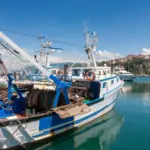

Challenges facing Scottish fishing industry
The Scottish Fishermen’s Federation (SFF) has said that the coming year presents a wide range of challenges for Scottish fishing, and it is vital that the industry does not become strangled by increasing regulation and dysfunctional legislation.
Key issues ahead include appraisal of how the landing obligation is working for the pelagic sector and setting the ground rules for its implementation in 2016 for the demersal fleet.
The management and designation of Marine Protected Areas, and the need to ensure sensible quota management that reflects actual stock status will also be high on the agenda.
Bertie Armstrong, chief executive of the SFF, said, “The volume of landings has remained relatively static for the last few years, yet the abundance of fish in the sea over that period has increased dramatically so. At the same time, our fishing fleets have become strangled by increasing regulation, bureaucracy and dysfunctional legislation.
“The landing obligation, or discard ban, has already just been introduced for our mackerel and herring fishermen and we will be watching closely to ensure that there is a level playing field for its control and monitoring across all EU member states and third party nations.
“There is also the real and very difficult challenge for its introduction in the demersal sector. A huge amount of work still needs to be done over the coming months to ensure that a practicable regime is developed that ensures the viability and profitability of the fleet. It must be remembered that we are entering uncharted territory here and it is essential that there is a large degree of latitude and flexibility in its implementation. It would be a tragedy if it were implemented in a way that proved devastating to our fleet at the very time when fish stocks are increasing.”
Mr Armstrong also added that a common sense approach to the management of Marine Protected Areas is needed, and that another key area of SFF’s work over the coming year will be the development of the support of the industry in providing even more input into the fish stock assessment process.
Related Articles
 FISHERIES
 FISHERIES
 WORLD FISHING EVENTS