



Six countries in Asia are taking the lead to pilot plans to upgrade aquaculture in order to help meet the food security needs of a growing global population.
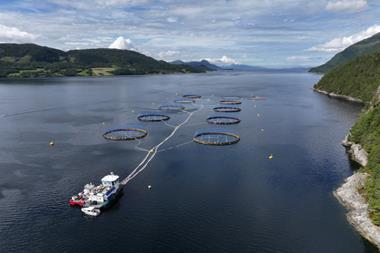
Bangladesh, Indonesia, Philippines, Sri Lanka, Timor-Leste and Viet Nam are working with the UN’s Food and Agriculture Organization to deliver ‘blue growth’ – a regional initiative which aims to promote the intensification of aquaculture production in an ecological and sustainable way.
“The work of these six countries in this regional initiative, and their outcomes, will be pivotal in finding ways to increase food production sustainably – something we must do in the course of the next generation – if we are to meet the needs and expectations of a seafood-hungry planet,” said Hiroyuki Konuma, FAO assistant director-general and regional representative.
“FAO predicts that by 2050 the world will need to increase food production by an average of 60% globally and 77% in developing countries,” Konuma said. “Changing diets are also increasing demand for more fish. But further intensification of aquaculture must be ecologically sustainable – we must achieve ‘Blue Growth’.”
Countries in the Asia-Pacific region contribute about 90% of the world’s aquaculture production. It is also critical to the diets of people and food production in the region, accounting for about 60% of fish for human consumption and 20% of animal food.
Due to the foreseeable population and economic growth across the Asia-Pacific region, FAO says that the demand for fish will continue to increase in the coming decades. It is estimated an additional 30 million tonnes of fish will be needed in order to meet the increasing demand for fish in the region as well as the global market.
With the stagnant production from capture fisheries, further growth of aquaculture in Asia-Pacific is considered as the most feasible way to meet such increasing demand. But past intensification of aquaculture has resulted in damage to the environment – mistakes that must not be repeated in a new round of intensification, says FAO.