





Oceana to give EU evidence of illegal fishing
Oceana has said that it will be sending the EU evidence of illegal fishing activity in the protected area surrounding Cabrera (Balearic Islands) and south Majorca.
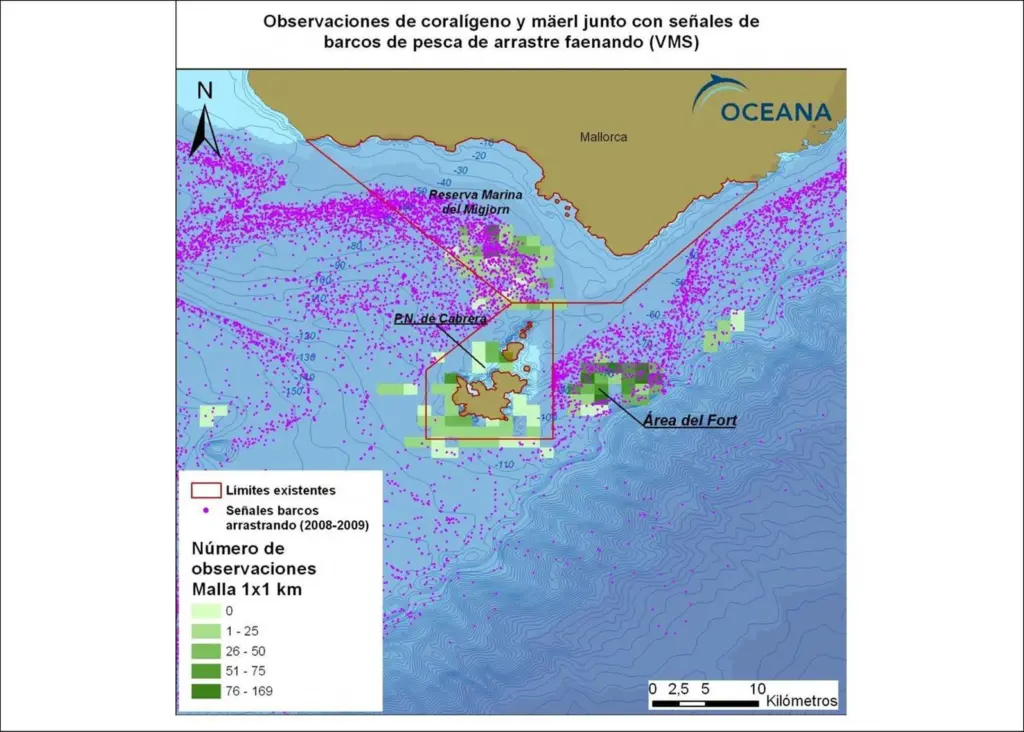
The organisation will be filing a claim against Spain for breach of the Council Regulation (EC) No. 1967/2006 for management of fishery resources in the Mediterranean Sea. Article 4 of the regulation establishes measures for the protection of essential habitats for fishing, such as coralligenous and maërl beds, measures which have not been yet been applied by Spain after six years of the entry into force of the Community regulations.
“We have cross-referenced many studies on the presence of protected habitats in the Mediterranean with fishing areas where harmful fishing gears are being used. In south Majorca, we have enough information to file a claim with the EU for breach of article 4 of the Mediterranean Regulations, which have been in force for six years now,” says Xavier Pastor, executive director of Oceana in Europe. “Some cases are so evident and shameful that they should be immediately punishable, such as trawling in maërl beds in the Migjorn reservation or the devastation of the unique coralligenous beds in Fort den Moreu, to the east of the Cabrera National Park”.
Coralligenous and maërl beds are tri-dimensional formations of calcareous red algae that shelter hundreds of species, many of them fishing species, which make use of them to hide, spawn, and find food. Despite their environmental significance and the fact that they are protected habitats, Oceana says that they are being devastated by fishing gears banned by European regulations in this kind of seabed.
Related Articles
 FISHERIES
 FISHERIES
 WORLD FISHING EVENTS